Namibia is one of those rare places that feels both vast and intimate at the same time—a country where silence speaks louder than noise, and landscapes stretch so far that time itself seems to slow down. It is, without exaggeration, one of the most visually arresting destinations in the world.
From dramatic deserts to colonial coastal towns, from wildlife encounters to surreal natural contrasts, Namibia offers something that few places can: a sense of scale, solitude, and raw beauty that is almost impossible to replicate. And that's precisely why it deserves a place on any serious traveler's list.
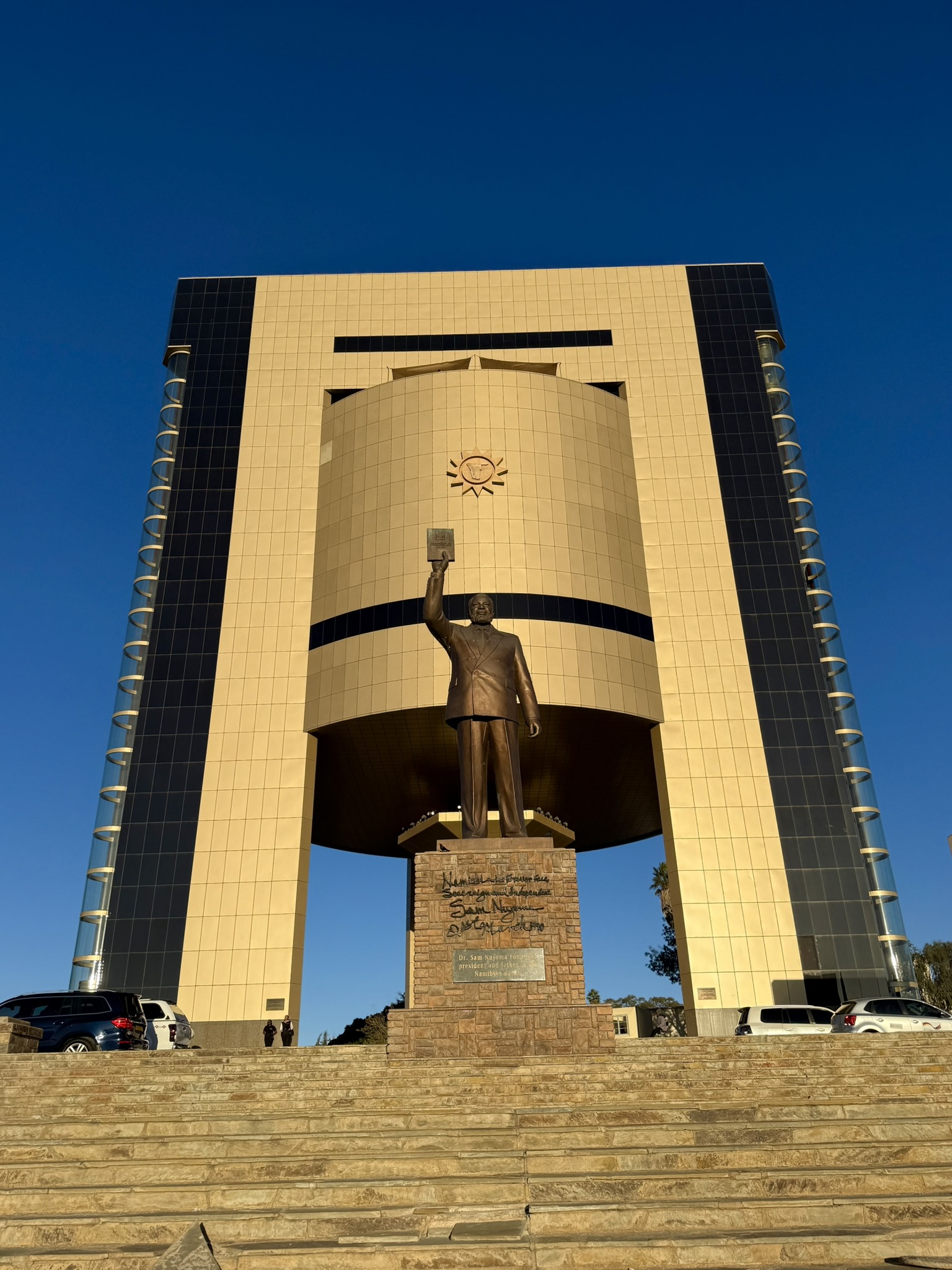
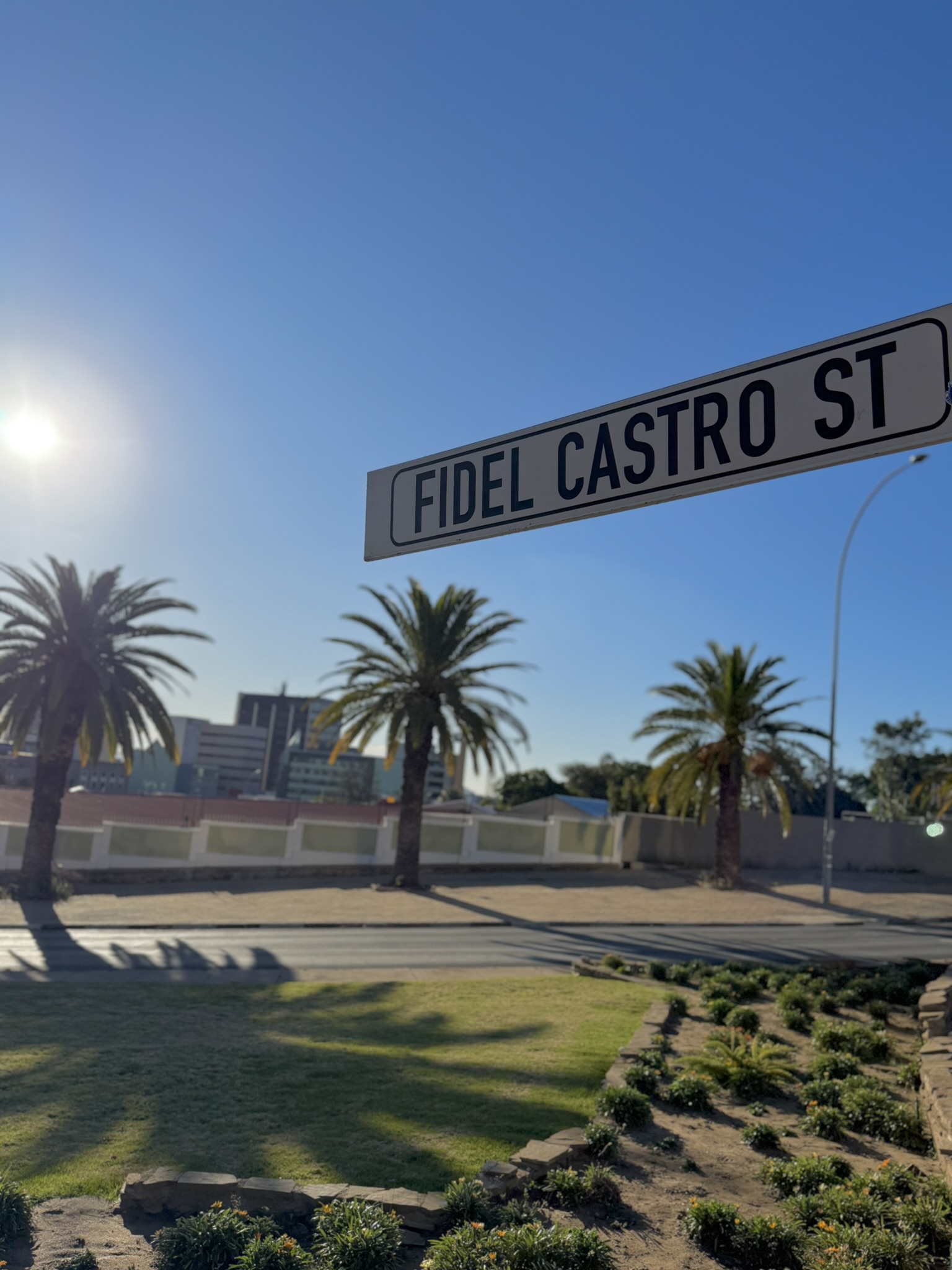
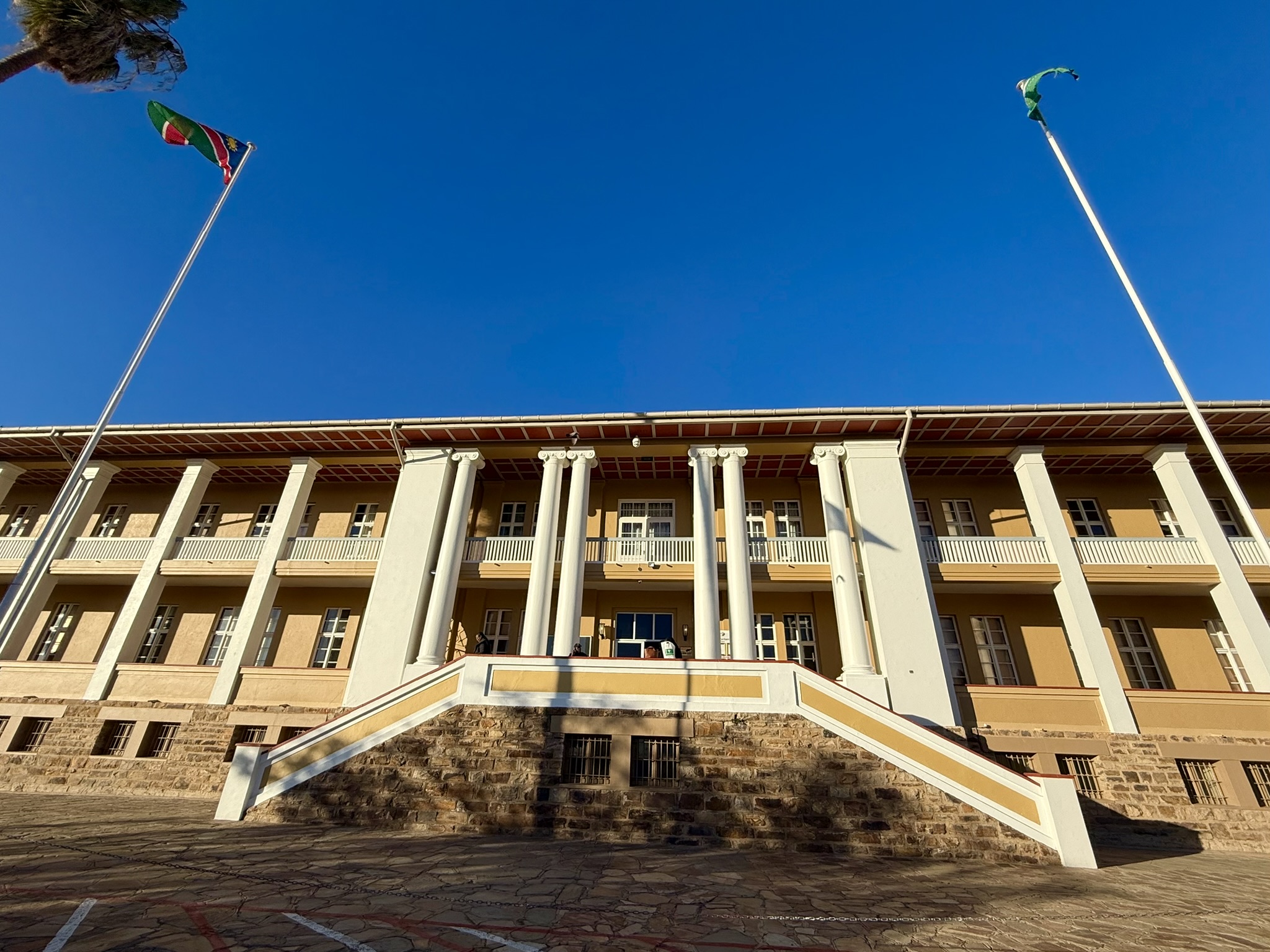
Windhoek: A Capital That Surprises
The journey begins in Windhoek, Namibia's capital—a city that quietly defies expectations.
Often described as one of the cleanest cities in Africa, Windhoek blends African identity with European influence in a way that feels both orderly and welcoming. Walking through the city, I passed by the Parliament buildings, the historic Alte Feste, and even Fidel Castro Street—a reminder of Cuba's role in supporting Namibia's independence.
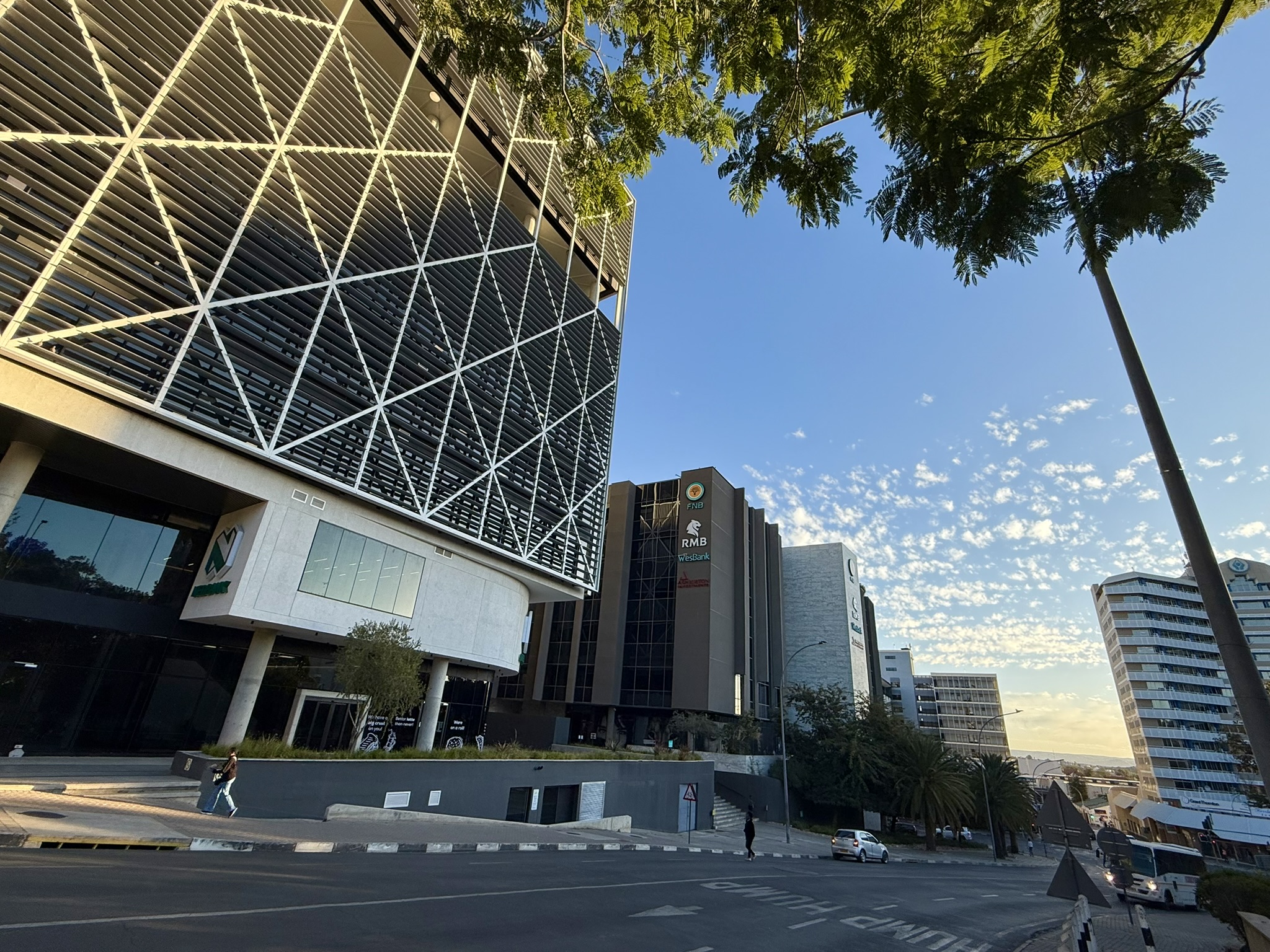
What struck me most, however, was the contrast. Parts of Windhoek felt so polished and modern that, at times, it reminded me of Beverly Hills—wide streets, manicured spaces, and a calm, almost understated elegance. It's not chaotic or overwhelming. Instead, it's a city that eases you into Namibia gently, before the landscapes begin to take over.
Swakopmund: A Slice of Germany on the Atlantic
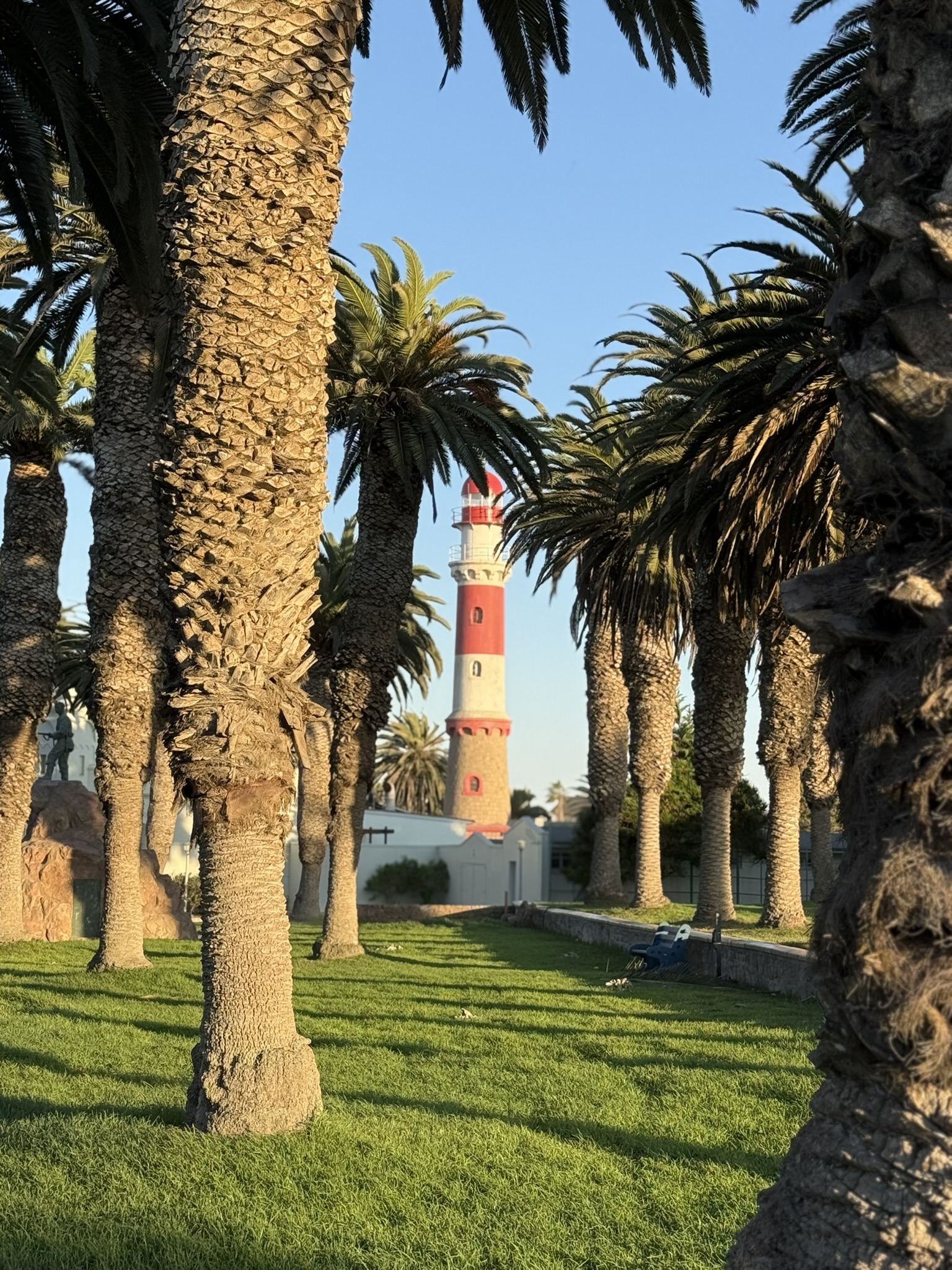
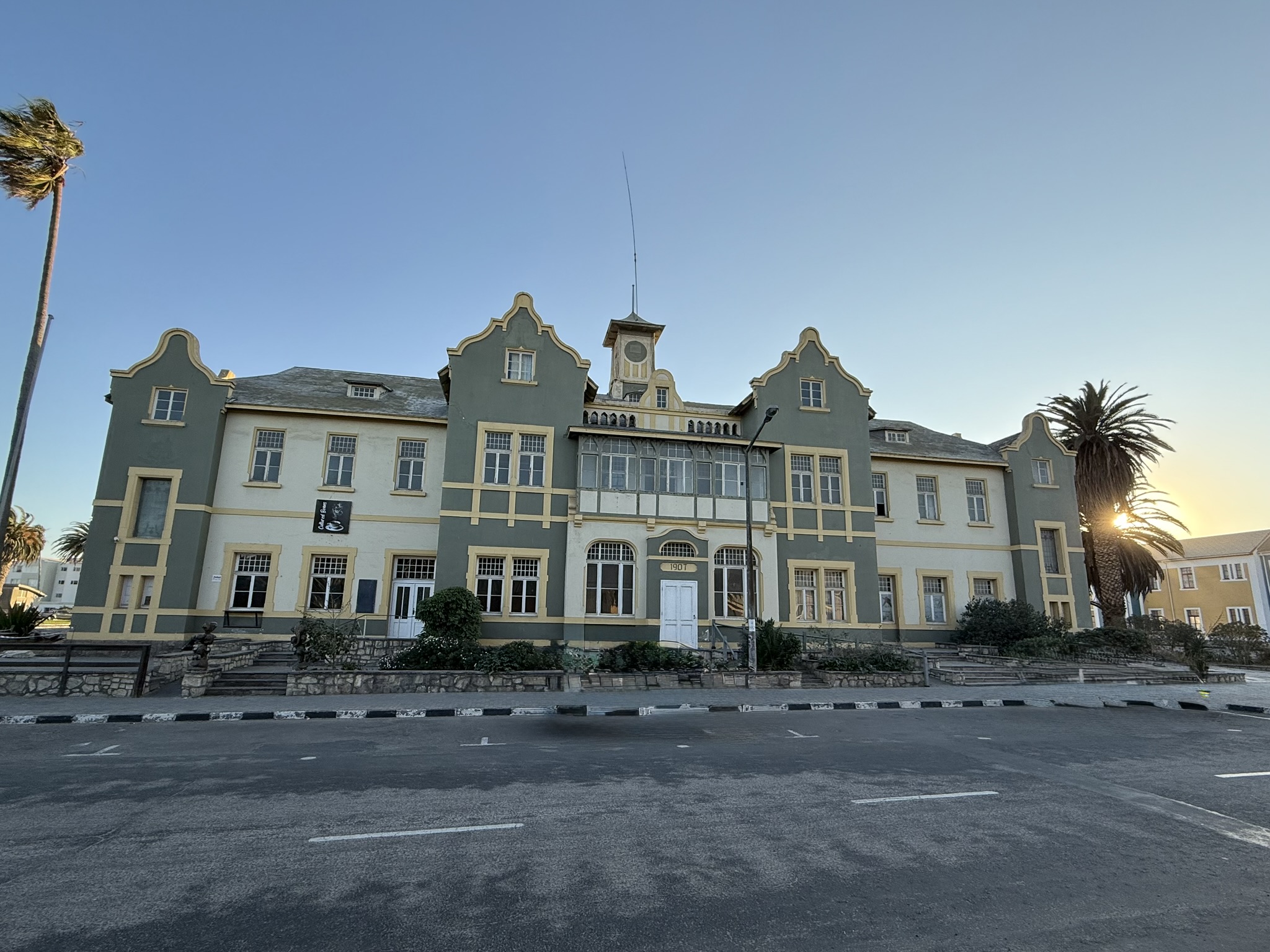
From Windhoek, I headed west toward the coast, eventually arriving in Swakopmund—a town that feels like a European enclave tucked between desert and ocean.
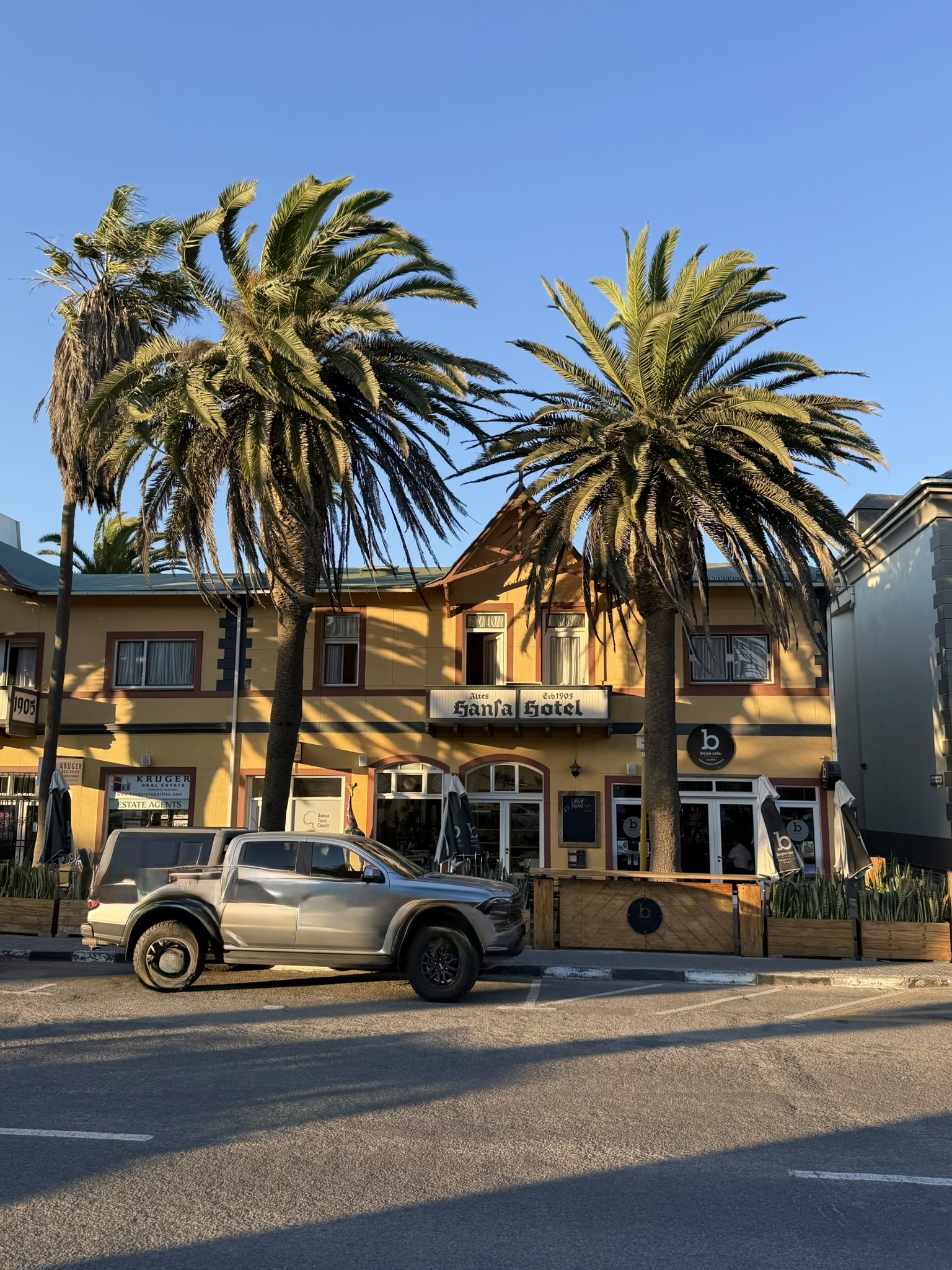
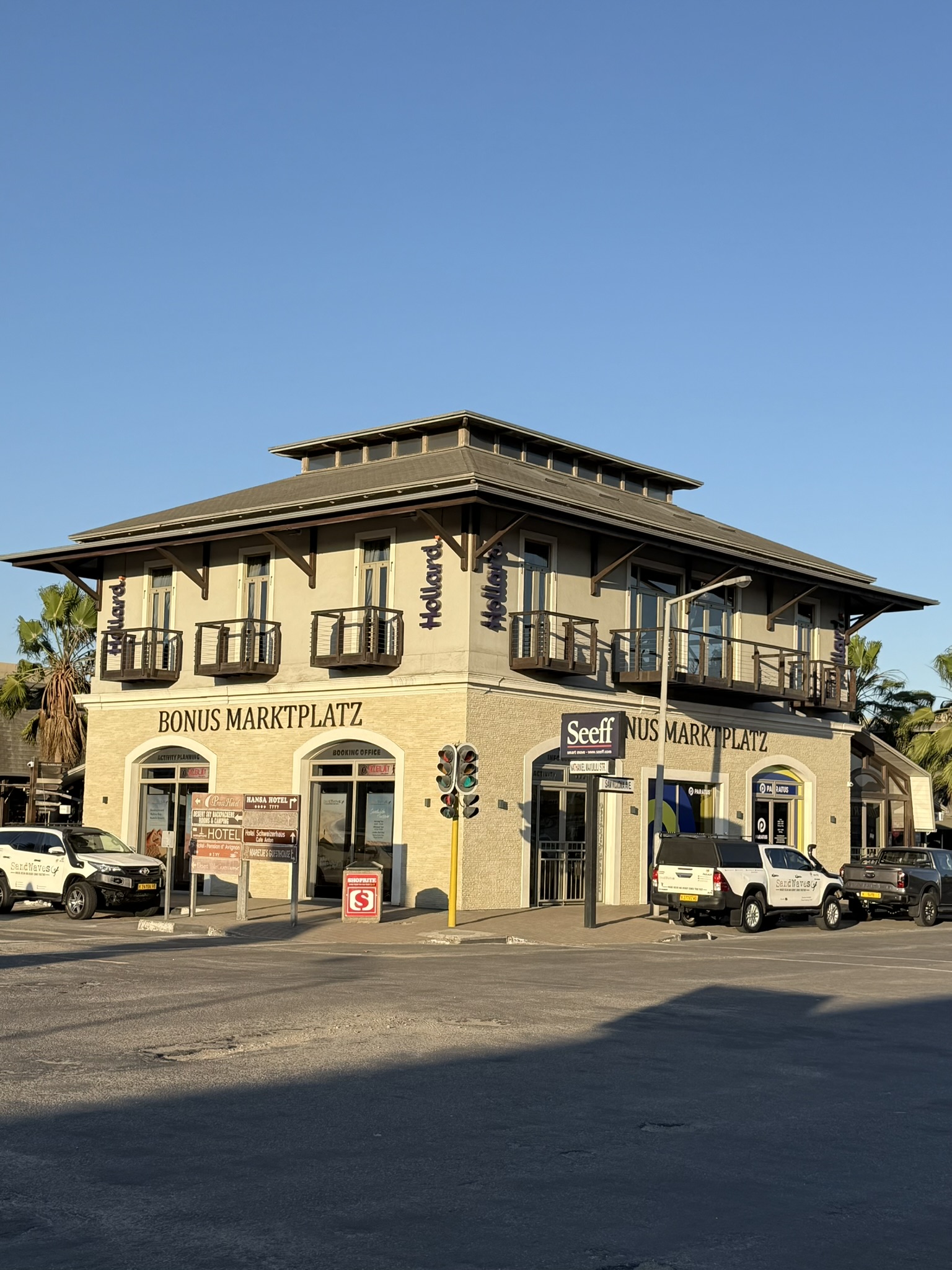
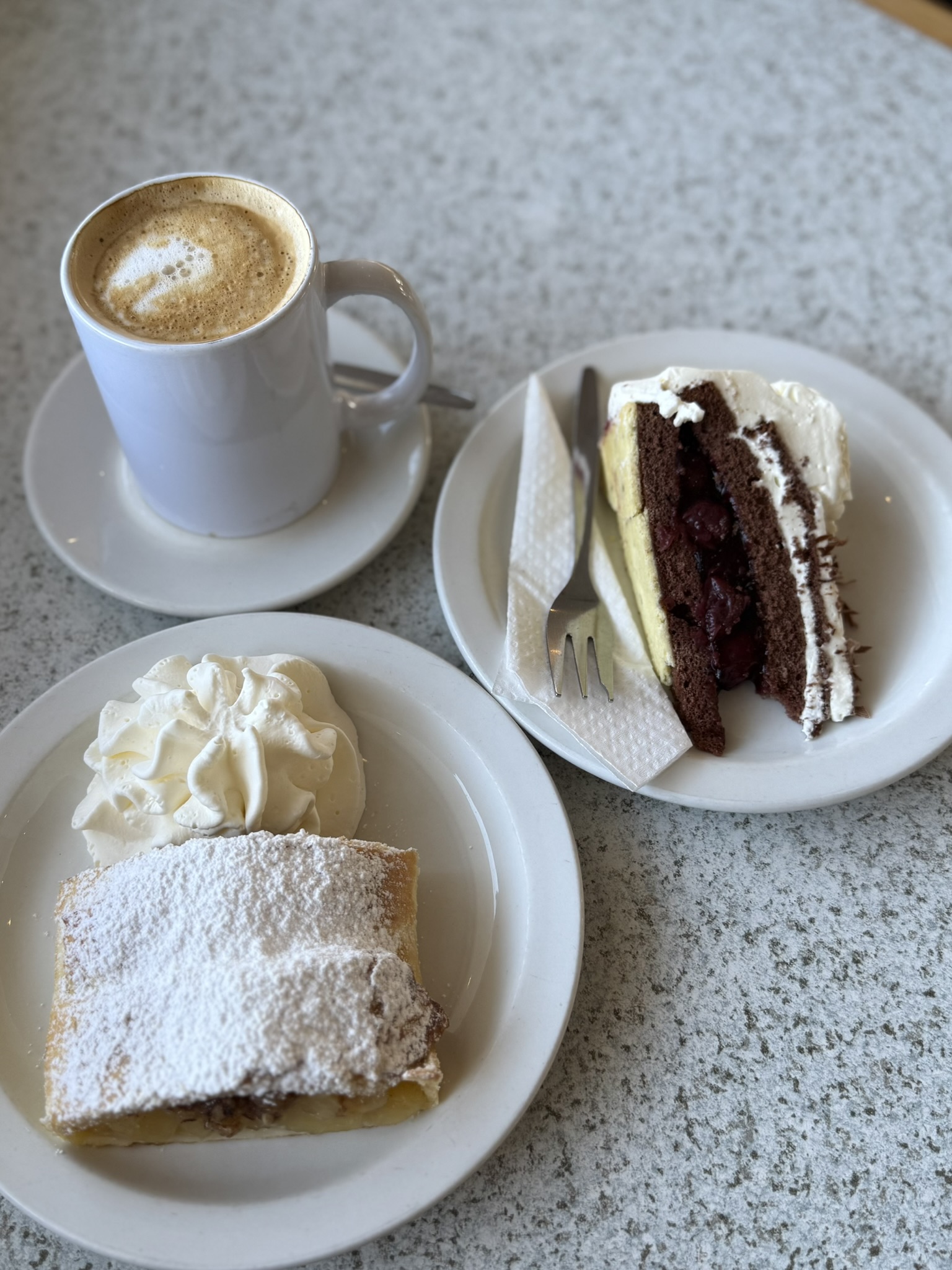
Founded during German colonial rule, Swakopmund still carries strong German influences today. The architecture is unmistakably European, with pastel-colored buildings and colonial facades lining the streets. Even more telling is the food—where bakeries serve up perfectly crafted apple strudel and rich Black Forest cake that would feel right at home in Bavaria.
But what truly defines Swakopmund is its setting.
Bounded by the Atlantic Ocean on one side and the vast Namib Desert on the other, it is both a destination and a gateway—especially for those looking to explore one of Namibia's most extraordinary landscapes.
Sandwich Harbour: Where Earth's Extremes Collide
Swakopmund serves as the perfect base for a day trip to Sandwich Harbour—one of the most surreal places I've ever experienced.
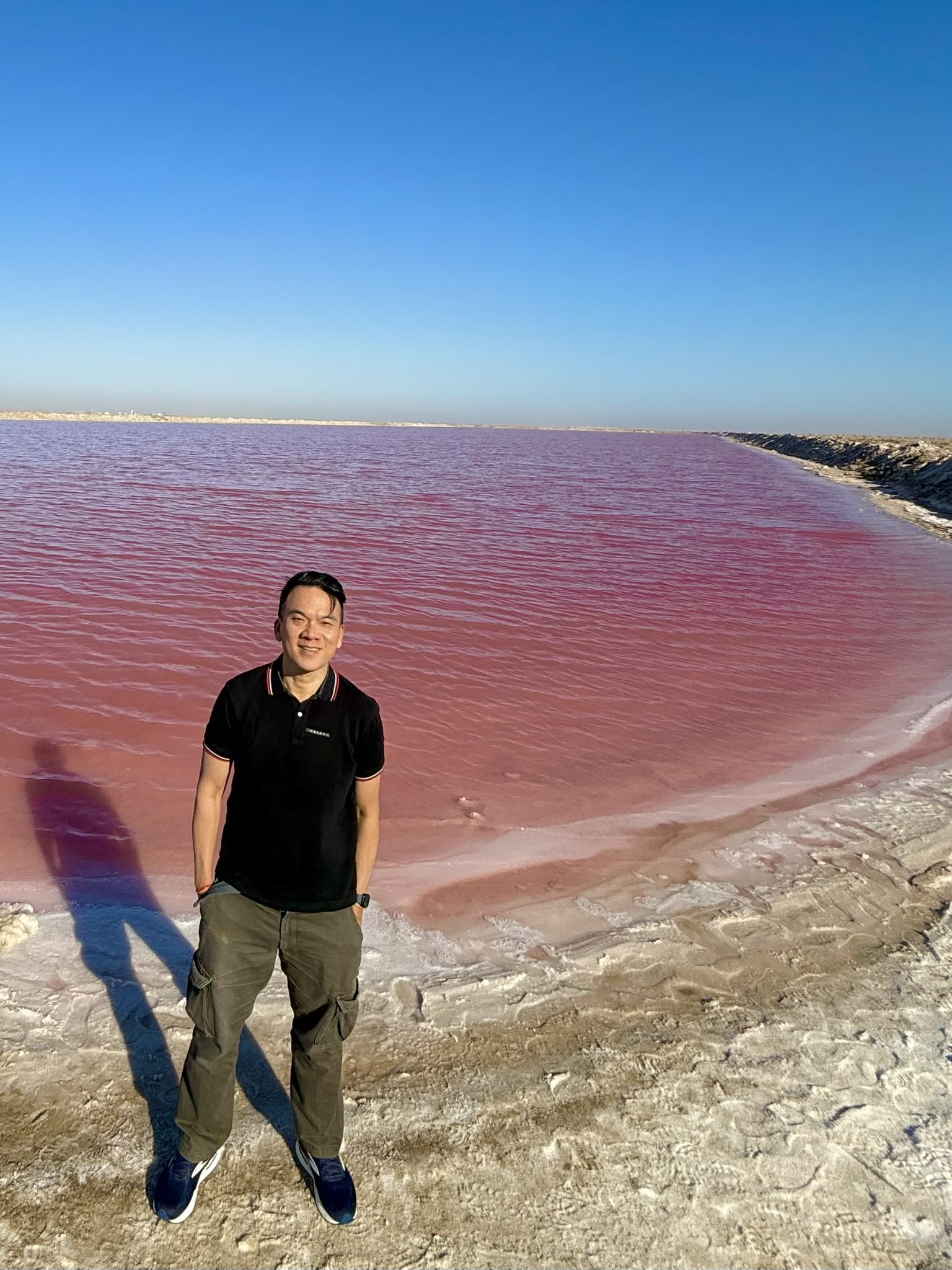
On the way, we stopped by a striking pink lake, its unusual color caused by algae and salt concentrations. It felt almost otherworldly—a quiet preview of the surreal beauty that Namibia delivers effortlessly.
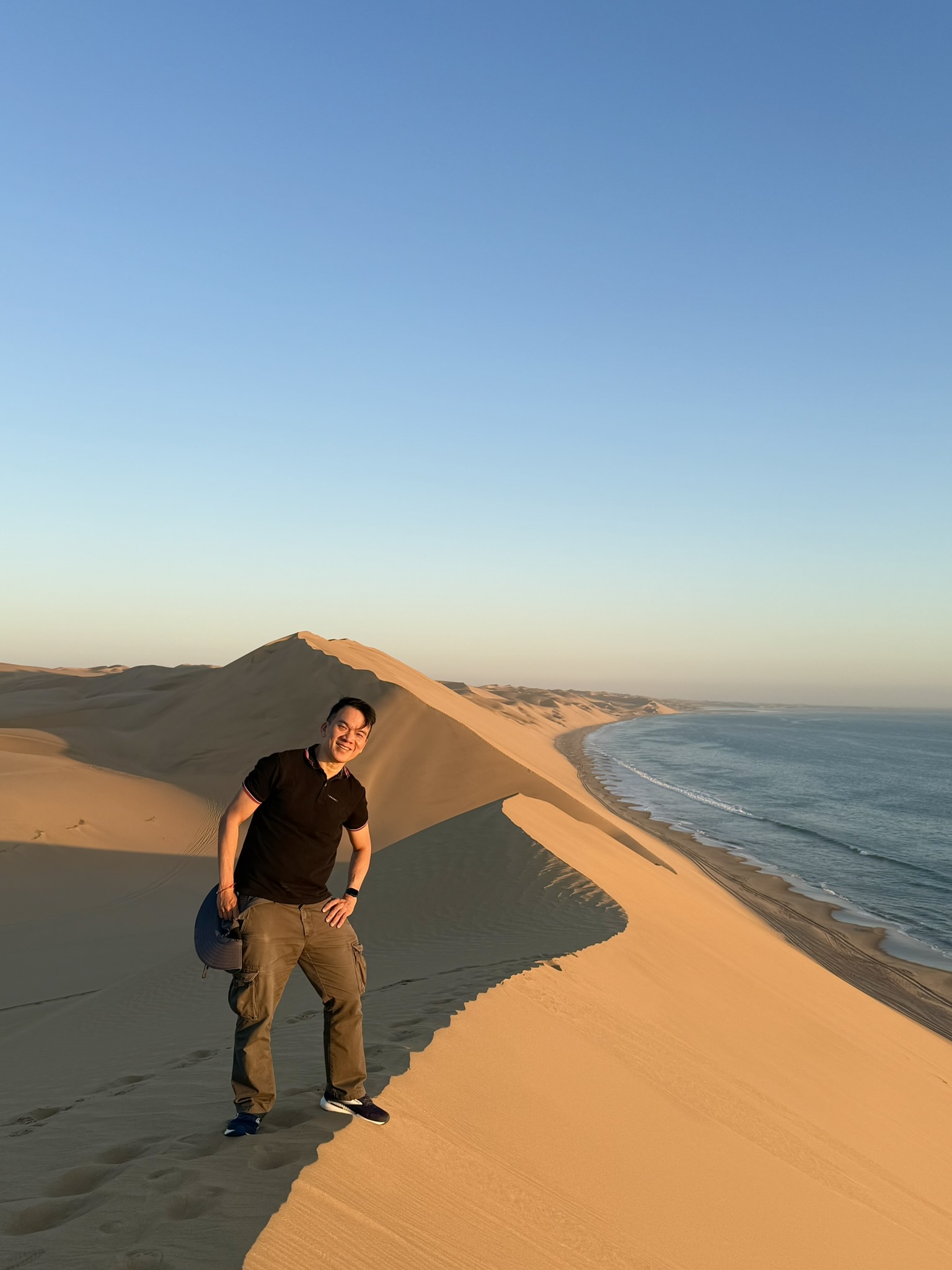
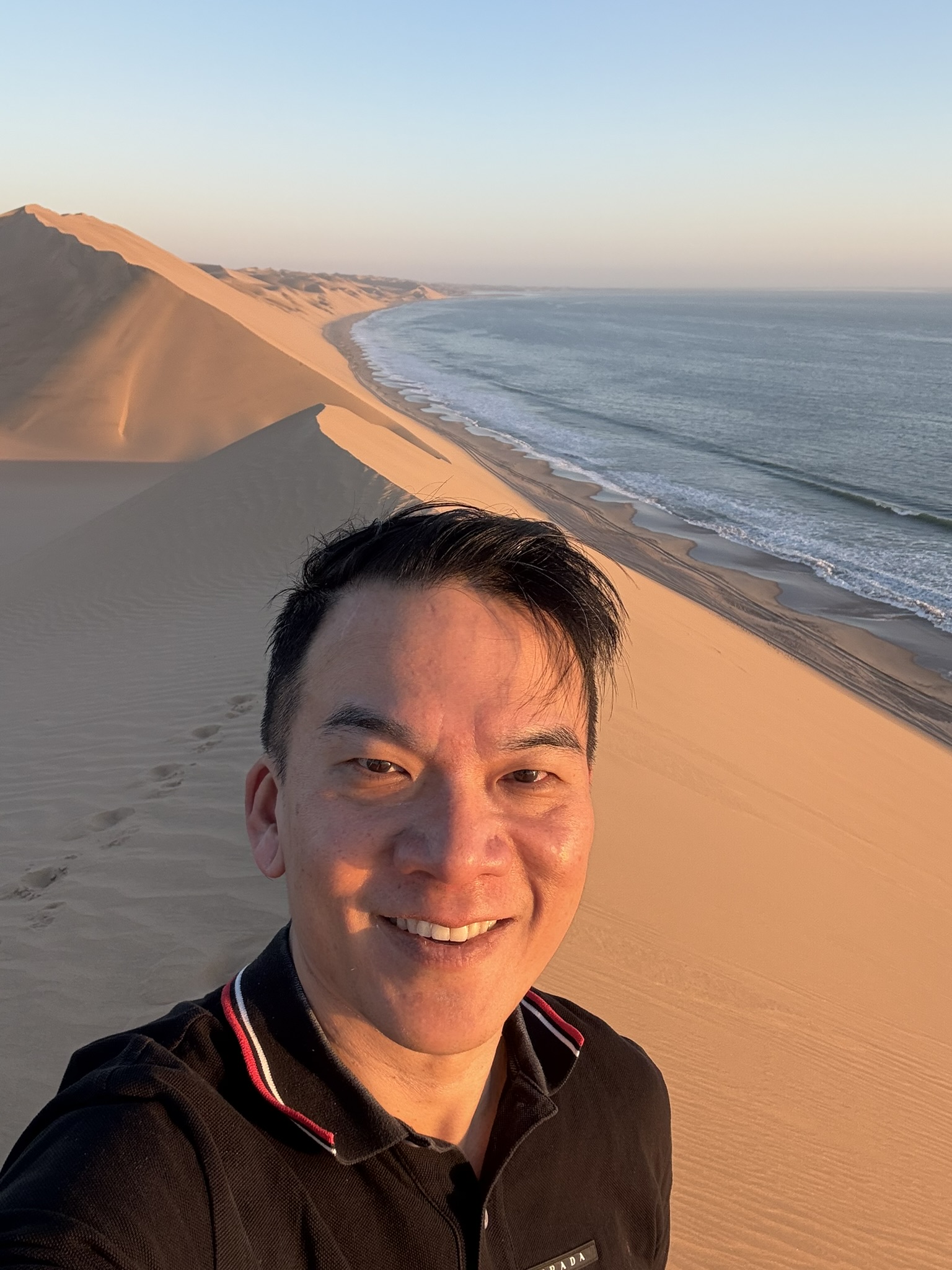
Then came Sandwich Harbour.
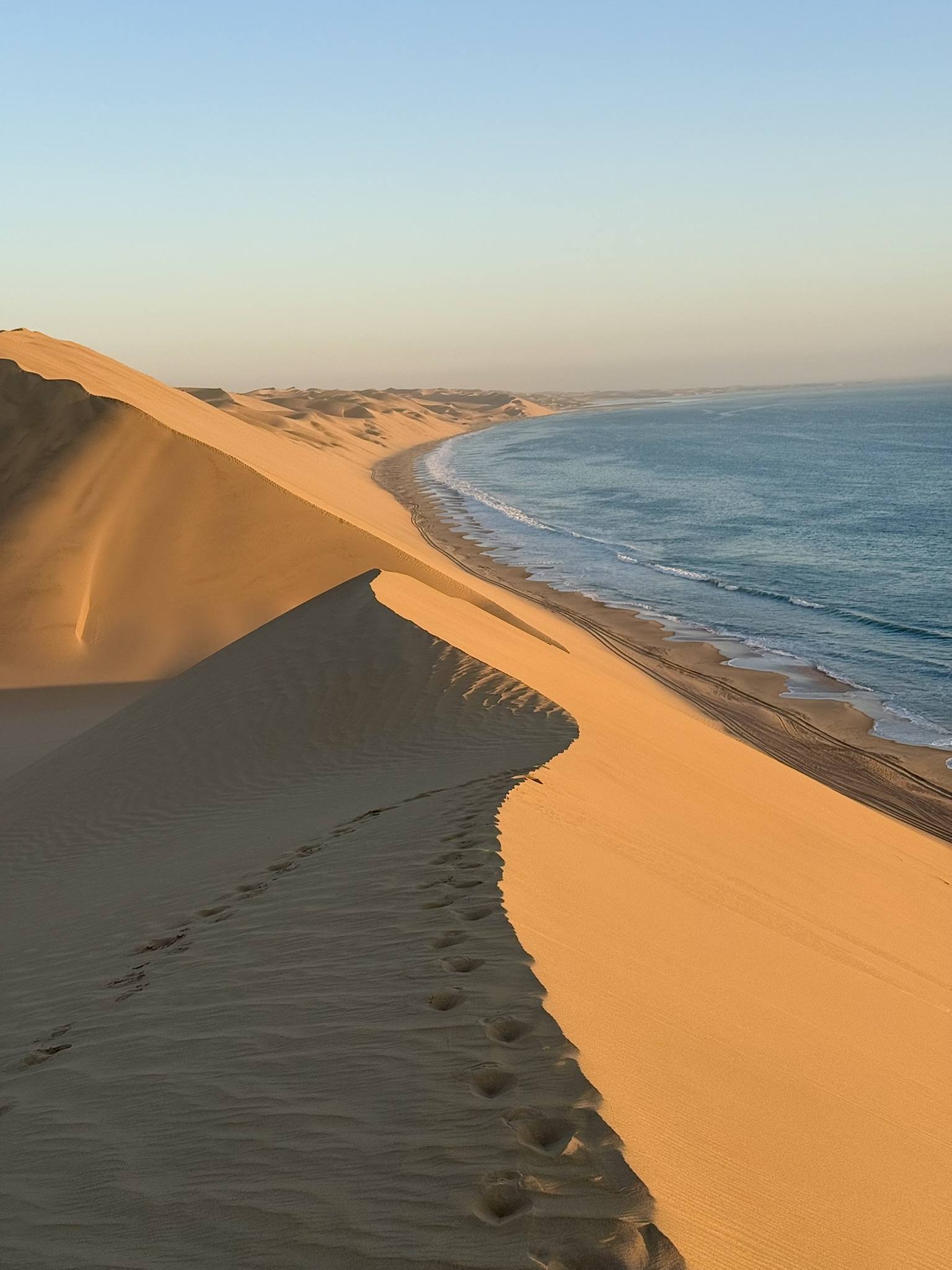
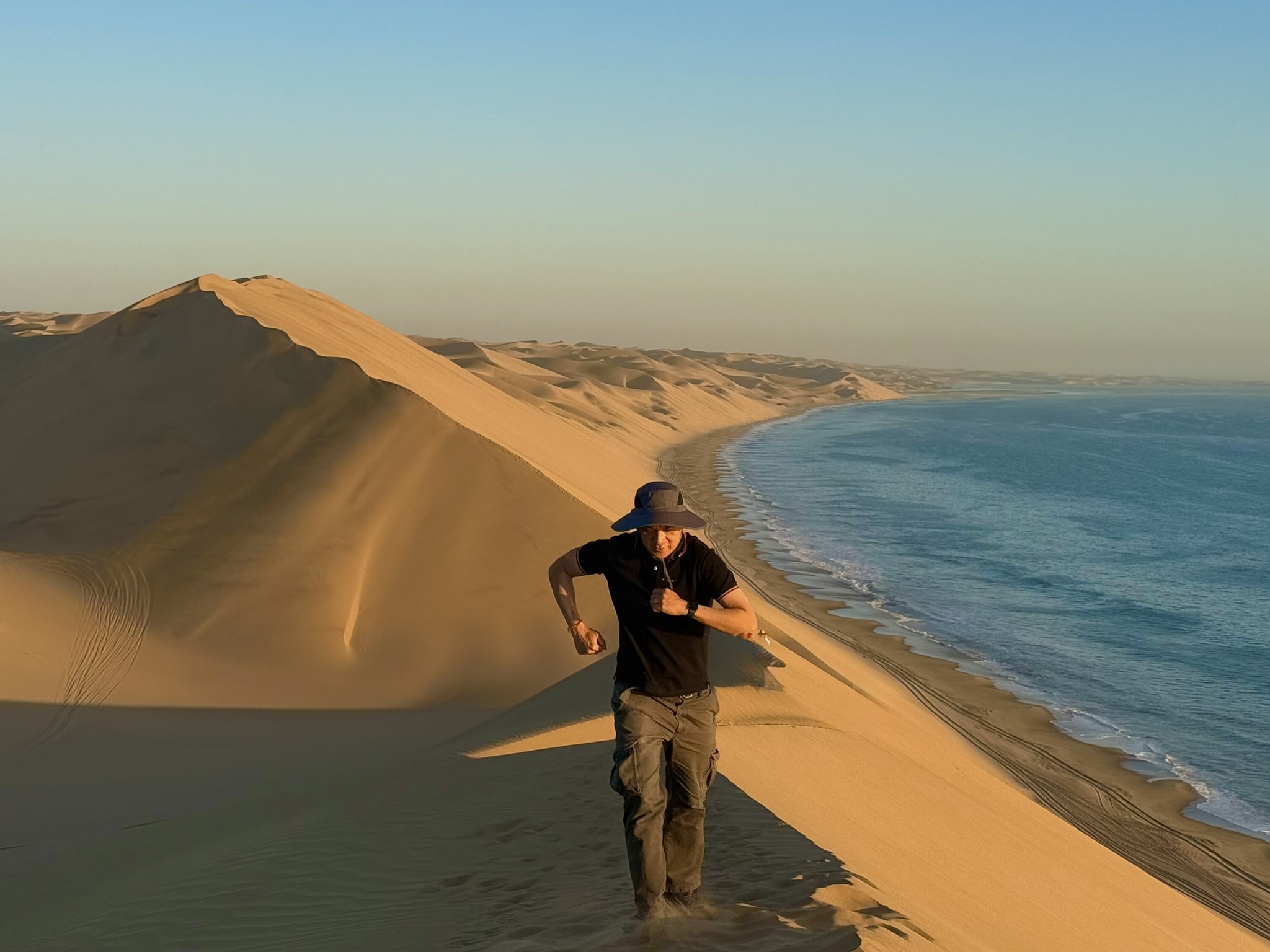
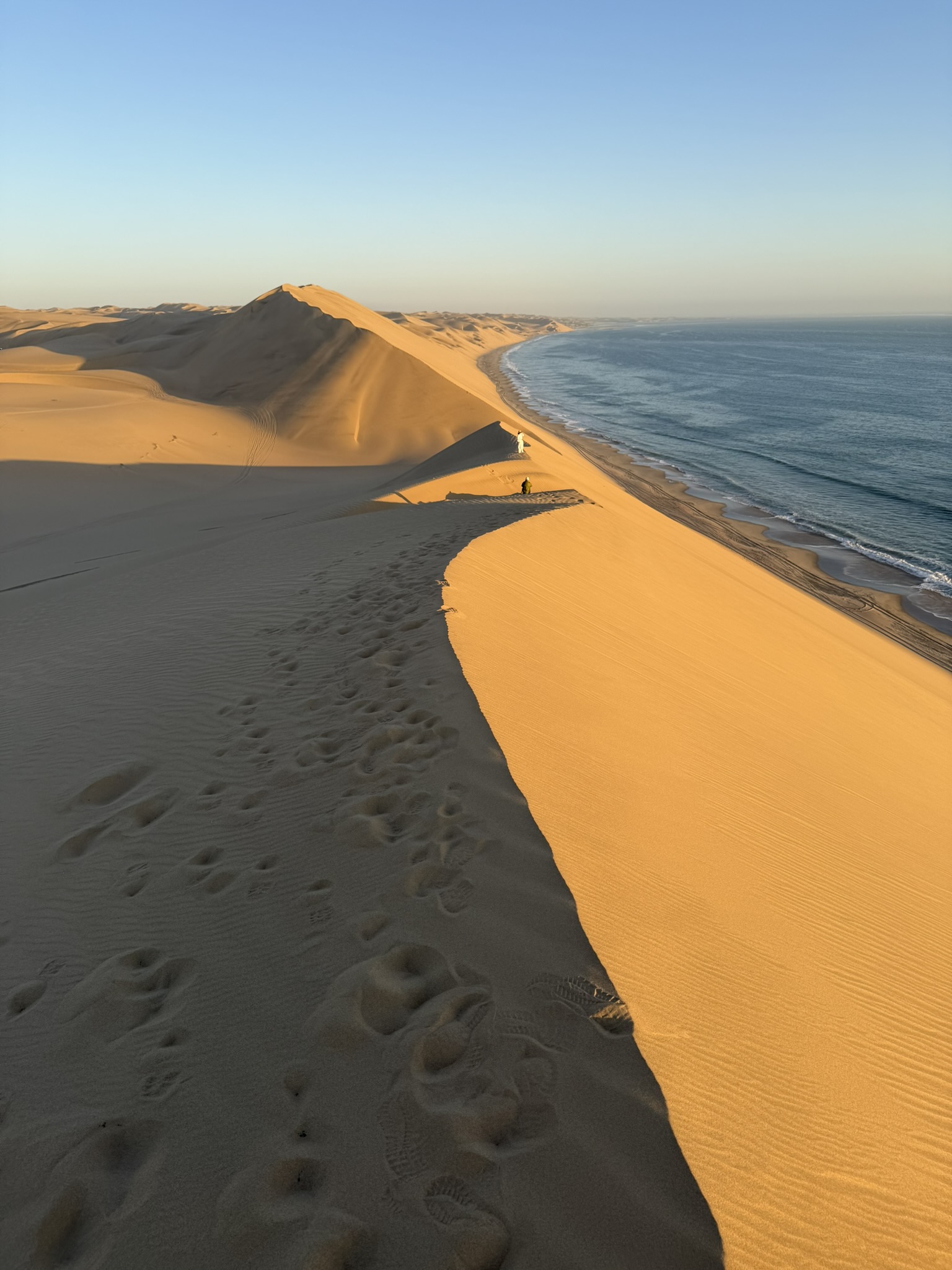
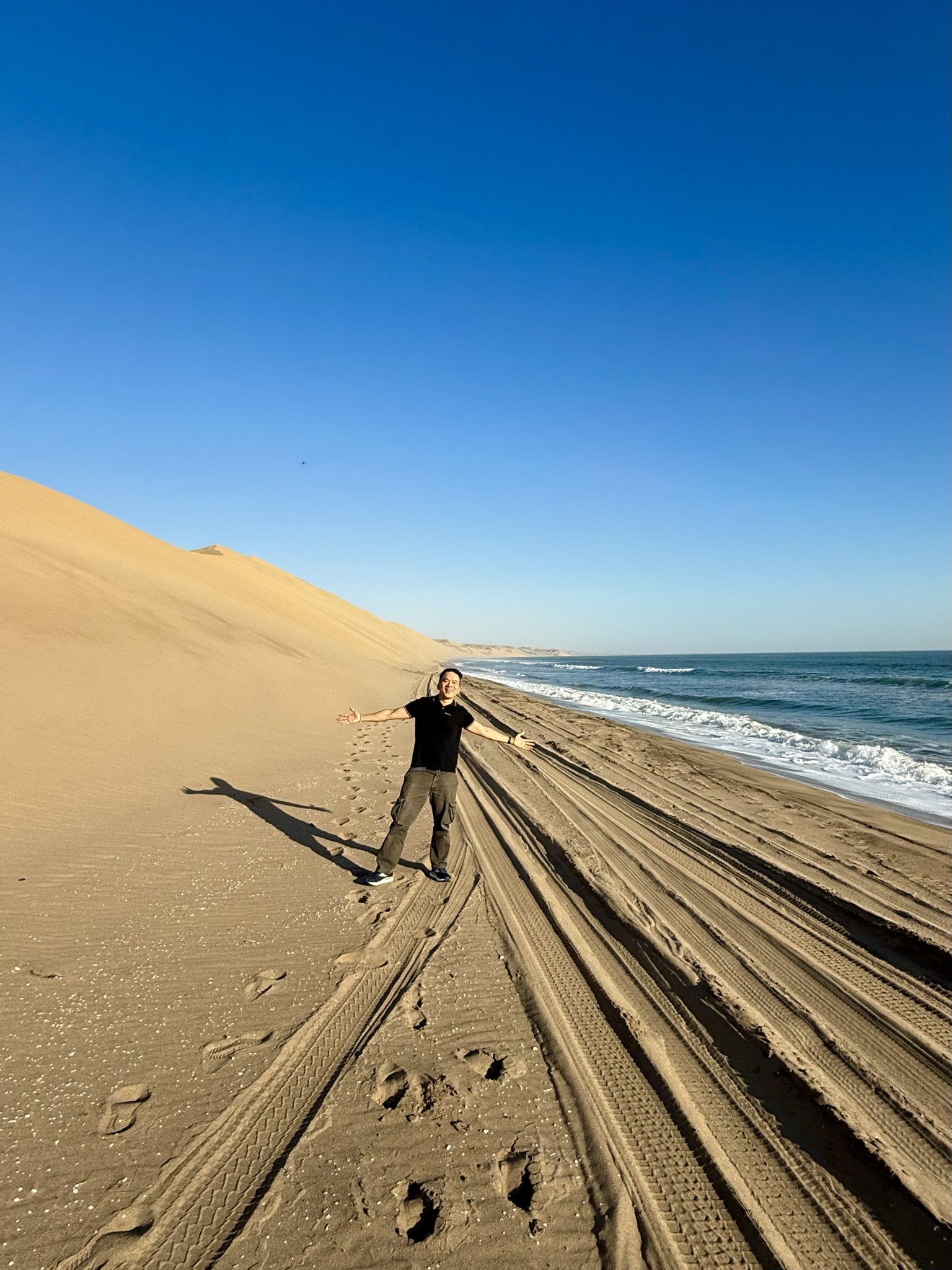
This is one of the few places on Earth where towering sand dunes meet the Atlantic Ocean in dramatic fashion. The experience of getting there is just as unforgettable as the destination itself.
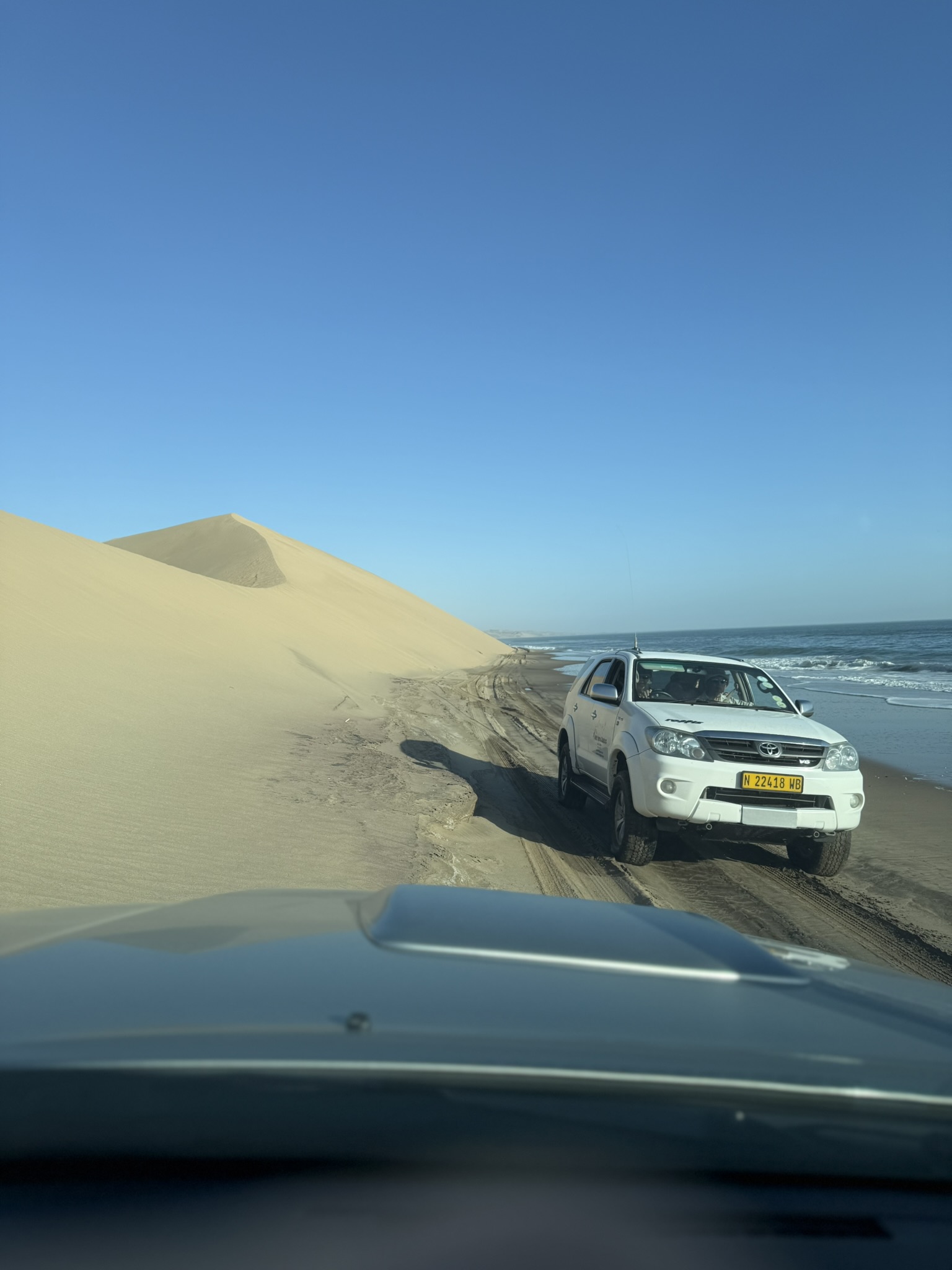
We drove along the dunes in a 4x4, navigating steep inclines and soft sand, at times hugging the narrow stretch of land between desert and sea. On one side, waves crashed against the shoreline. On the other, massive dunes rose like golden walls, sculpted by wind over millions of years.
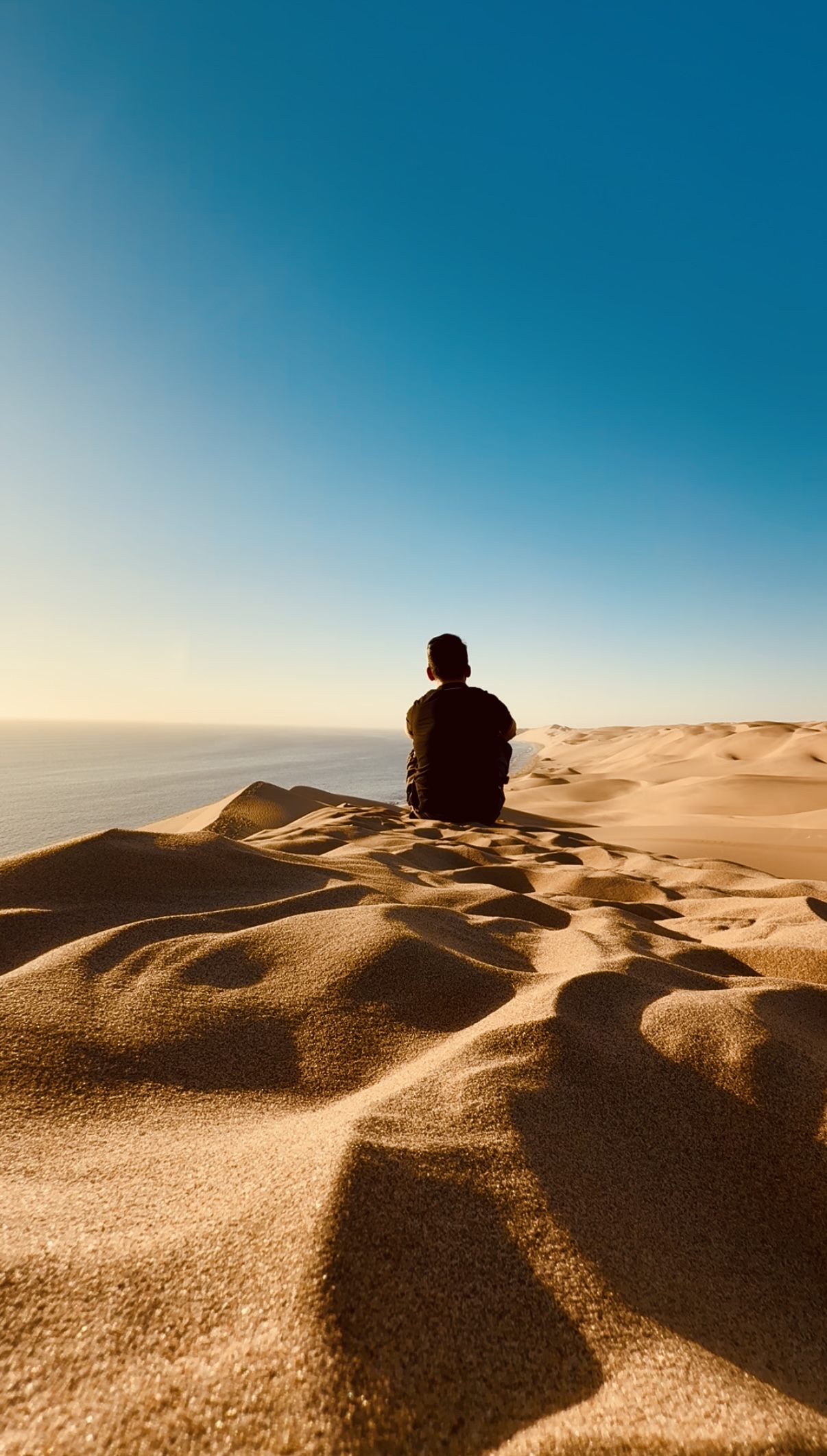
It's hard to describe the feeling of being there. You are literally sandwiched—hence the name—between two extremes: the relentless Atlantic and the ancient desert.
Moments like that remind you how small you are in the grand scheme of things.
Into the Namib Desert: Crossing the Tropic of Capricorn
Leaving Swakopmund behind, I ventured deeper into Namibia—into the heart of the Namib Desert.
The journey itself was part of the experience. We passed through vast gravel plains, winding mountain passes, and remote landscapes that seemed untouched by time.
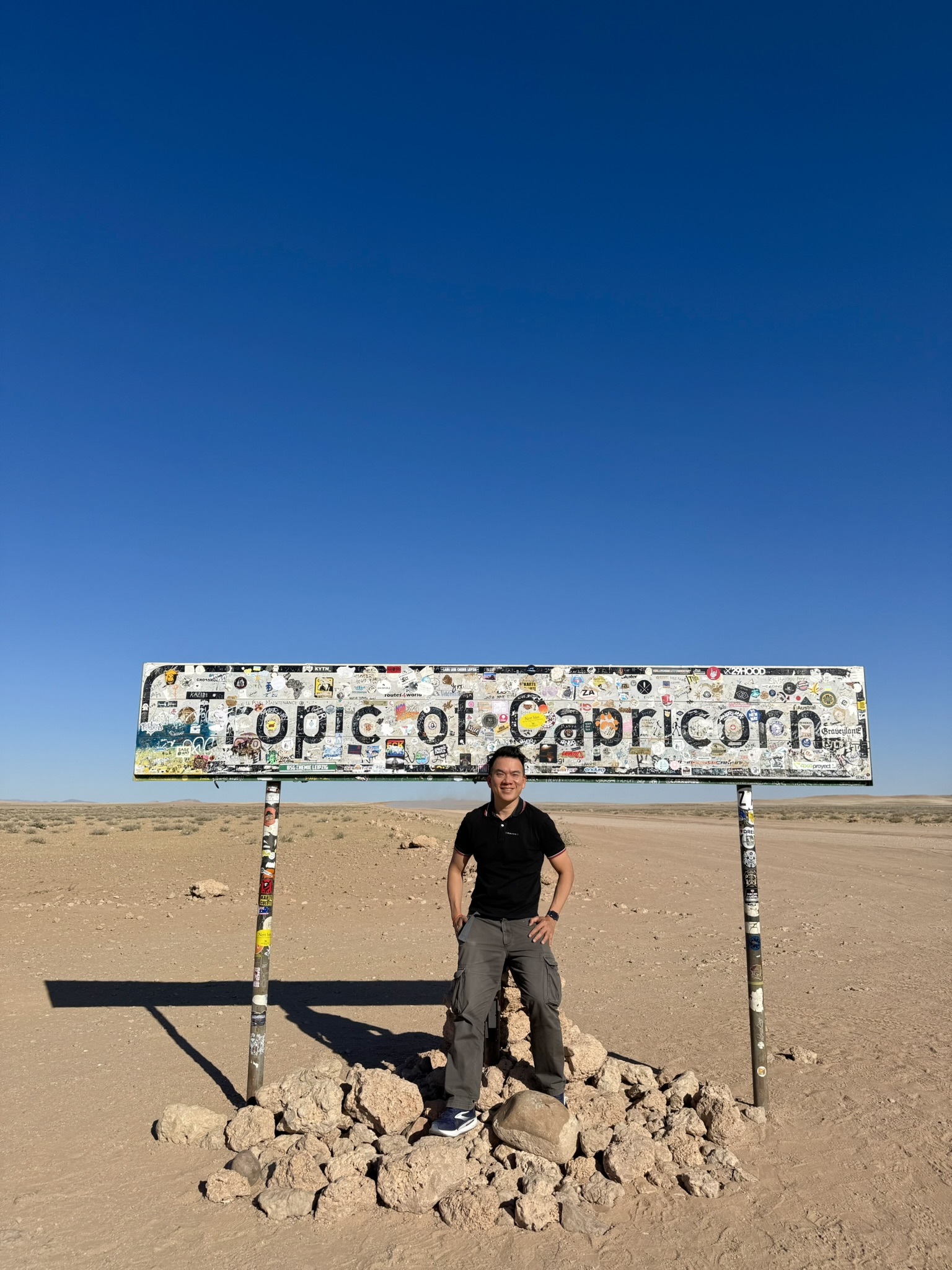
Along the way, we crossed the Tropic of Capricorn, marked by a simple signpost in the middle of nowhere—a quiet but meaningful milestone in the journey southward.
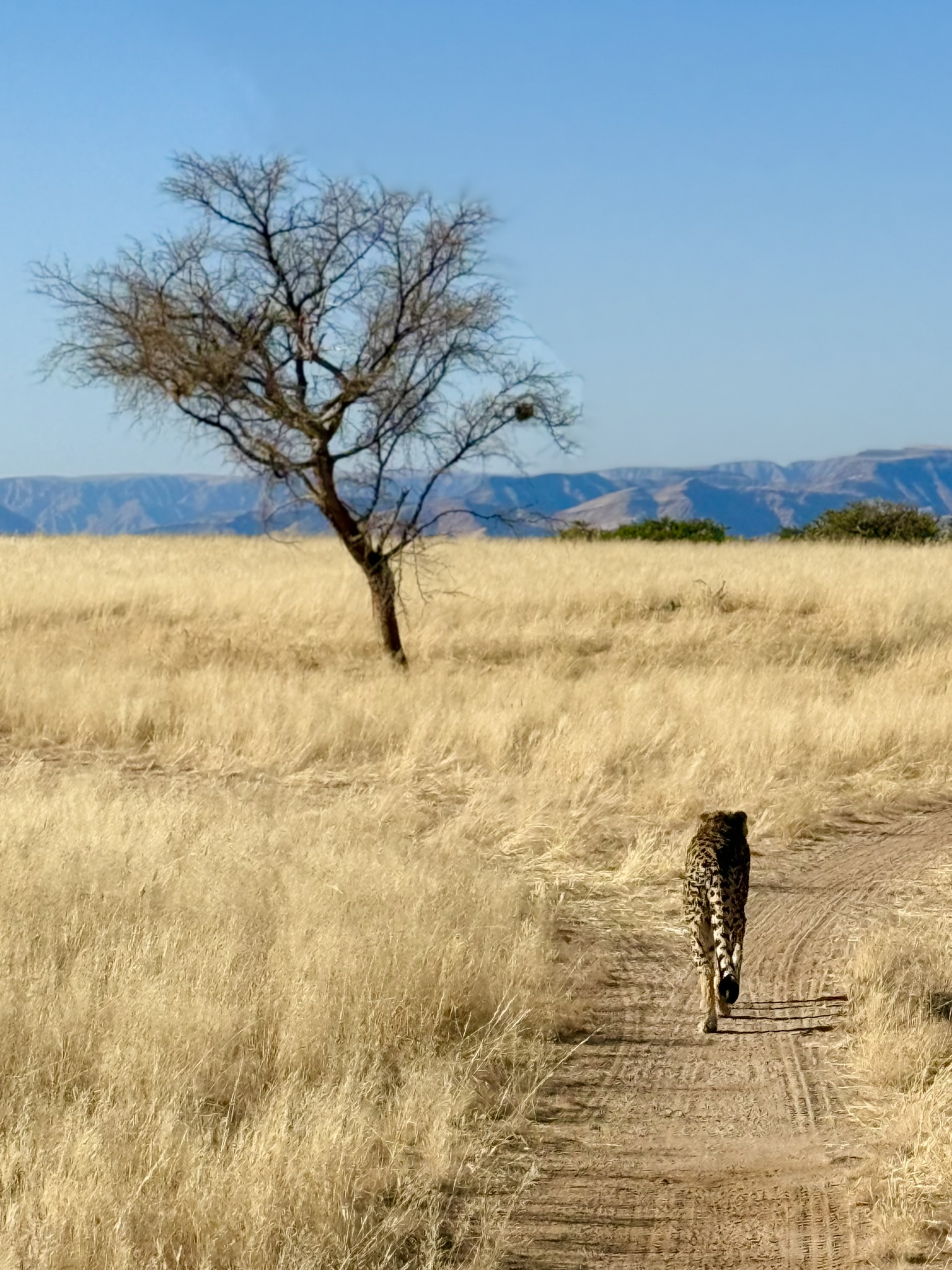
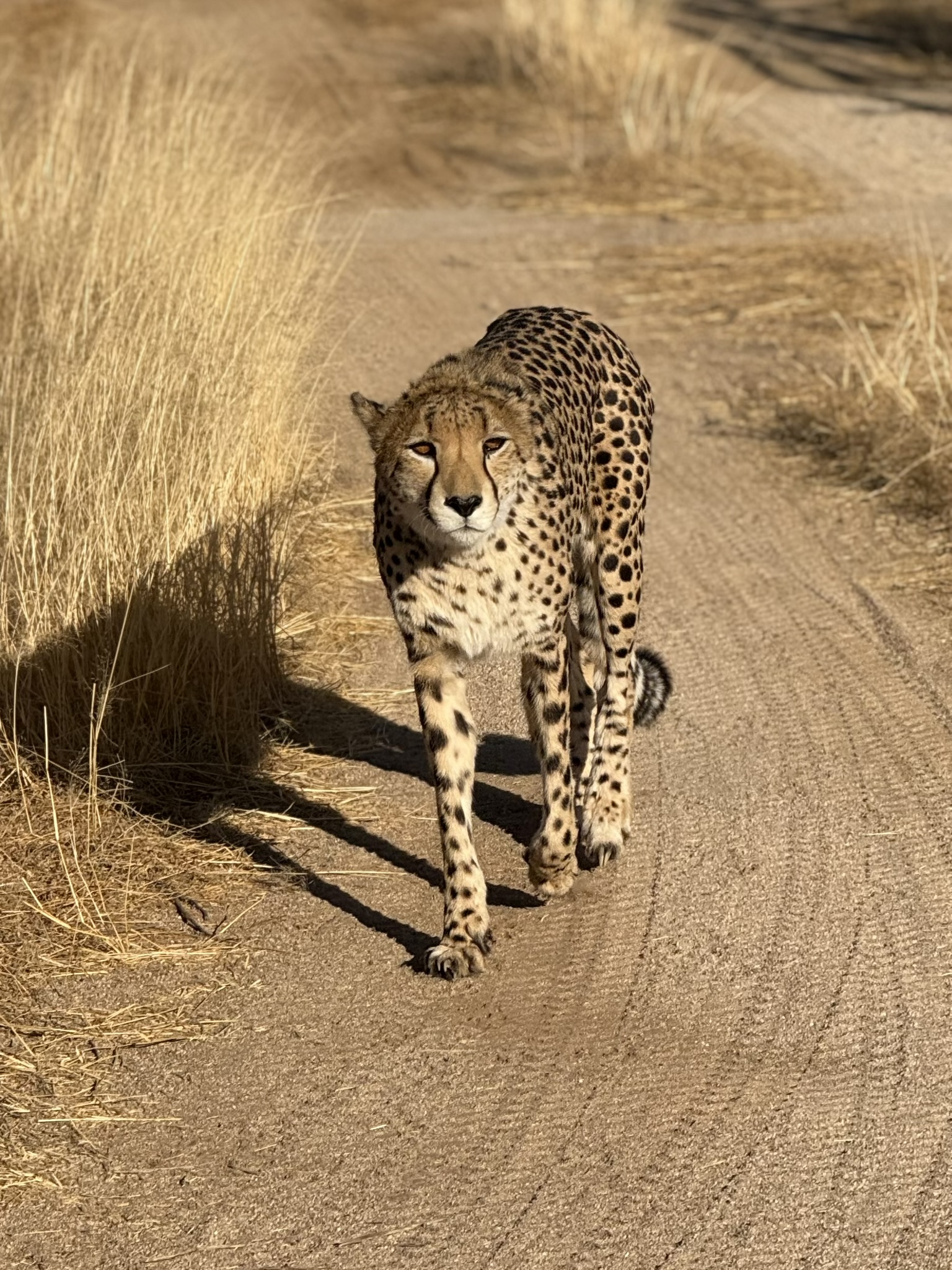
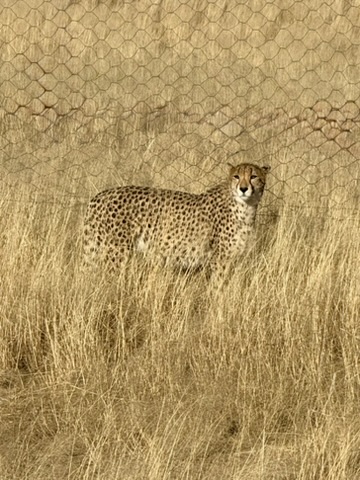
We also stopped at a cheetah sanctuary, a reminder that Namibia is not just about landscapes, but also about conservation and coexistence with wildlife.
The desert here is not empty—it is alive in subtle, powerful ways.
Sossusvlei: The Soul of Namibia
Deep within the Namib Desert lies Sossusvlei, one of Namibia's most iconic destinations.
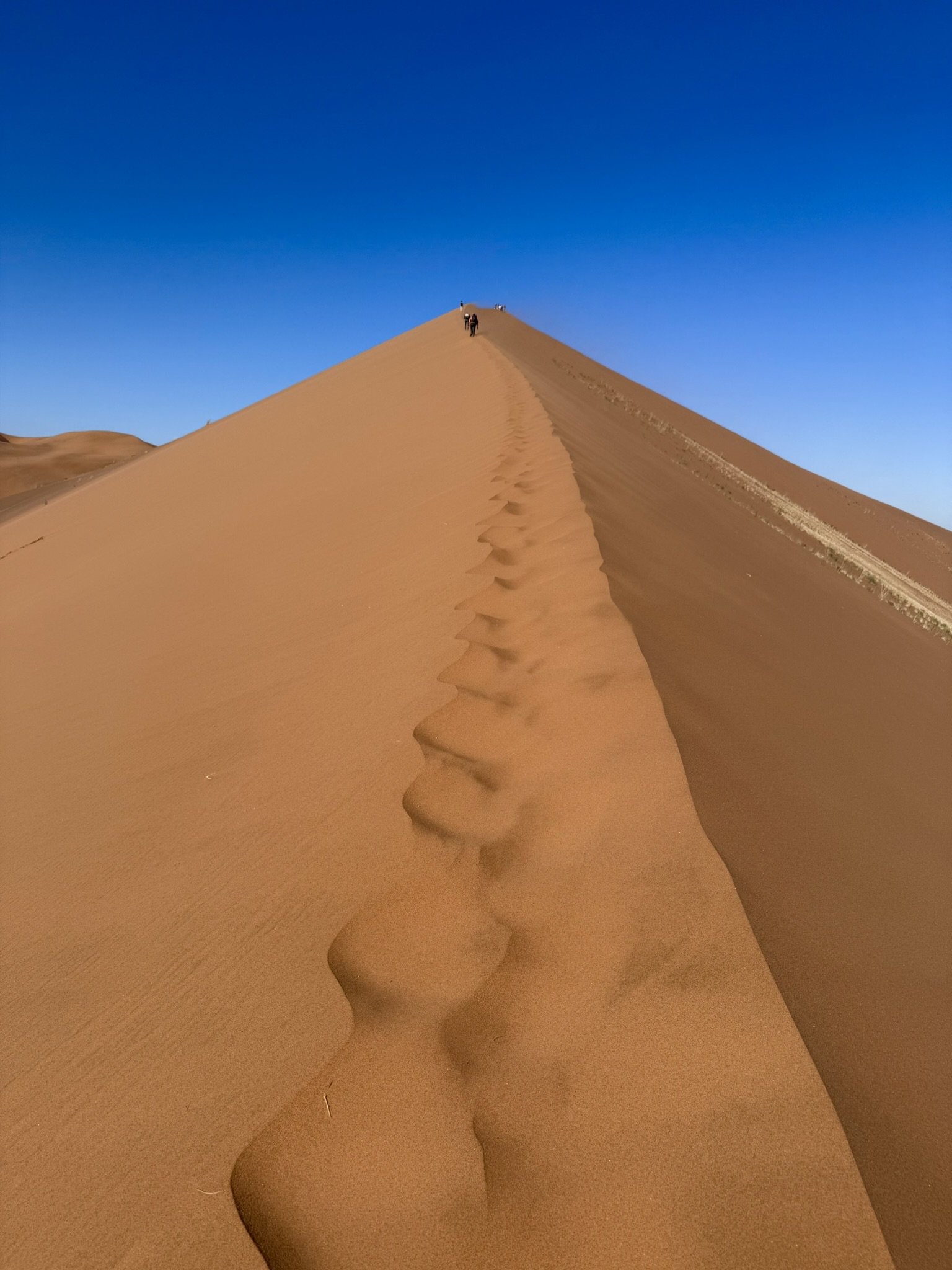
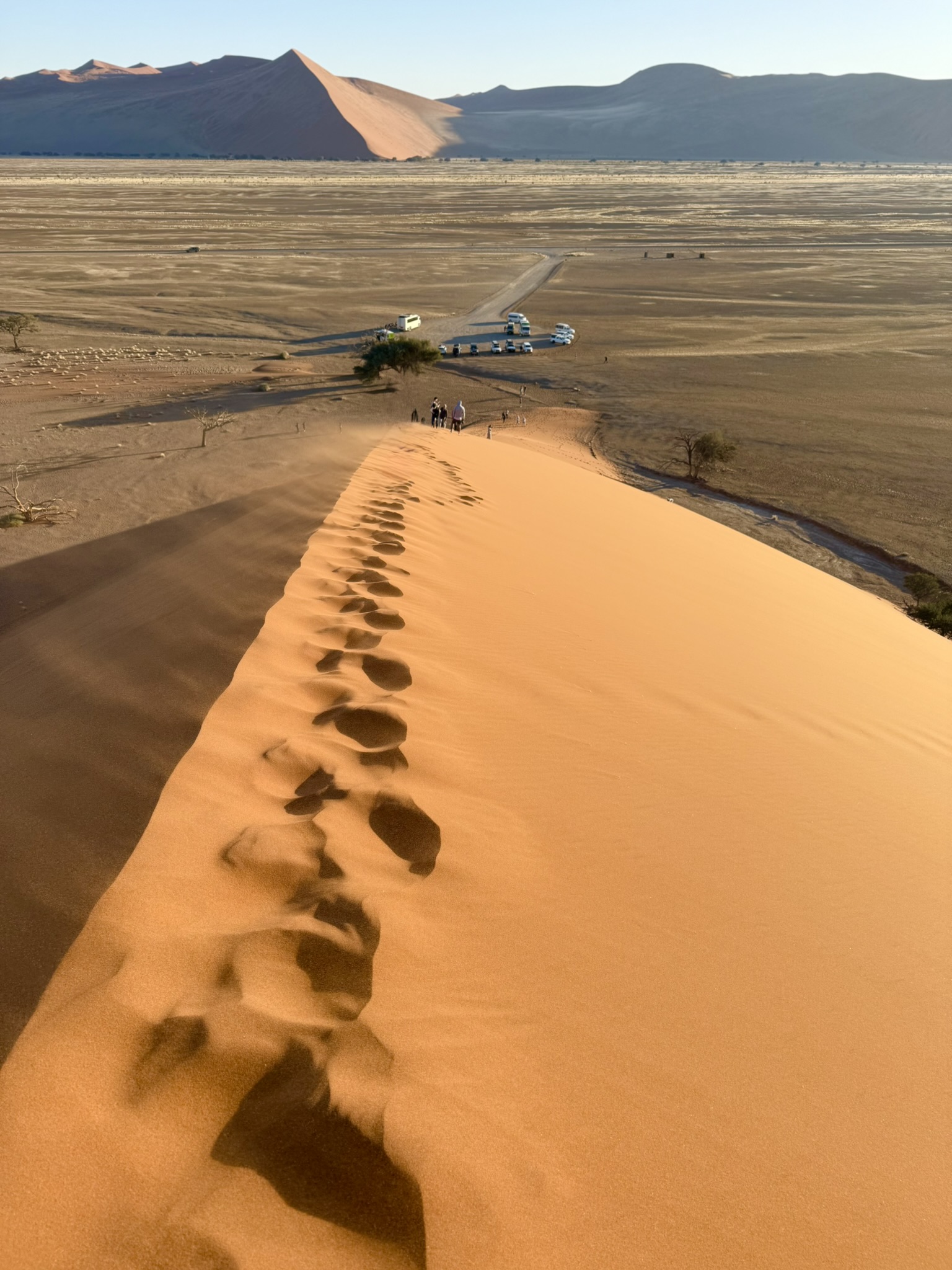
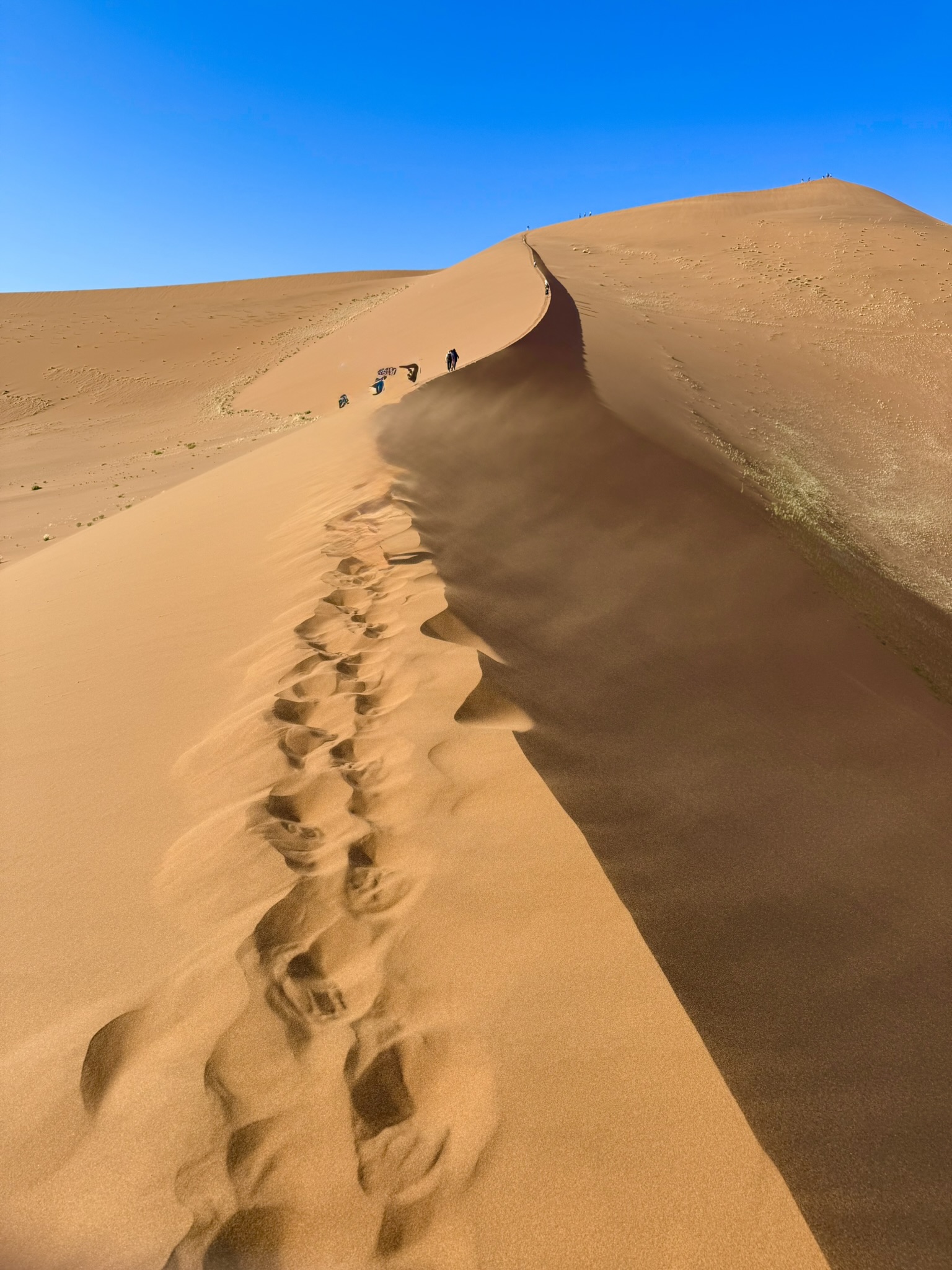
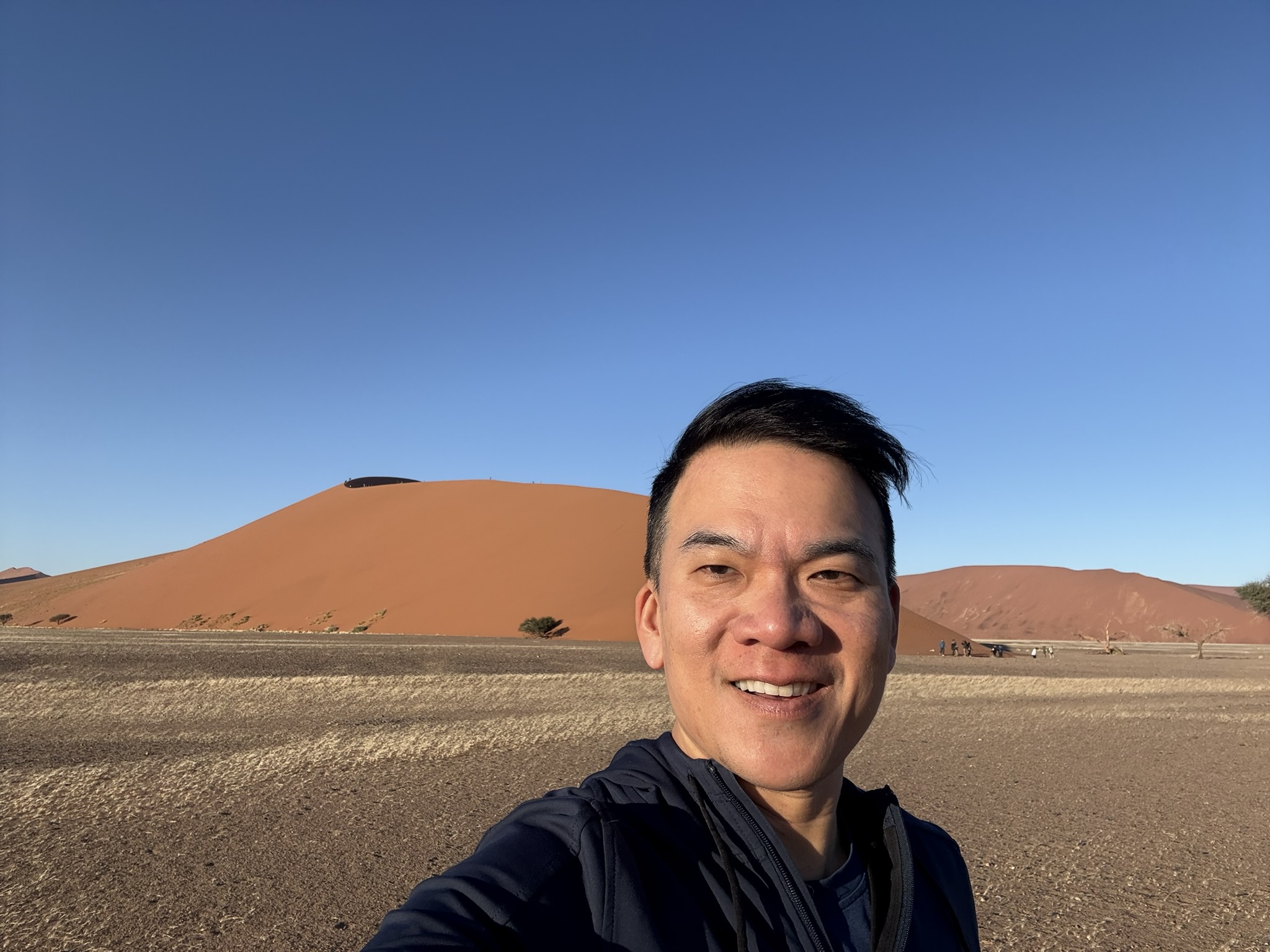
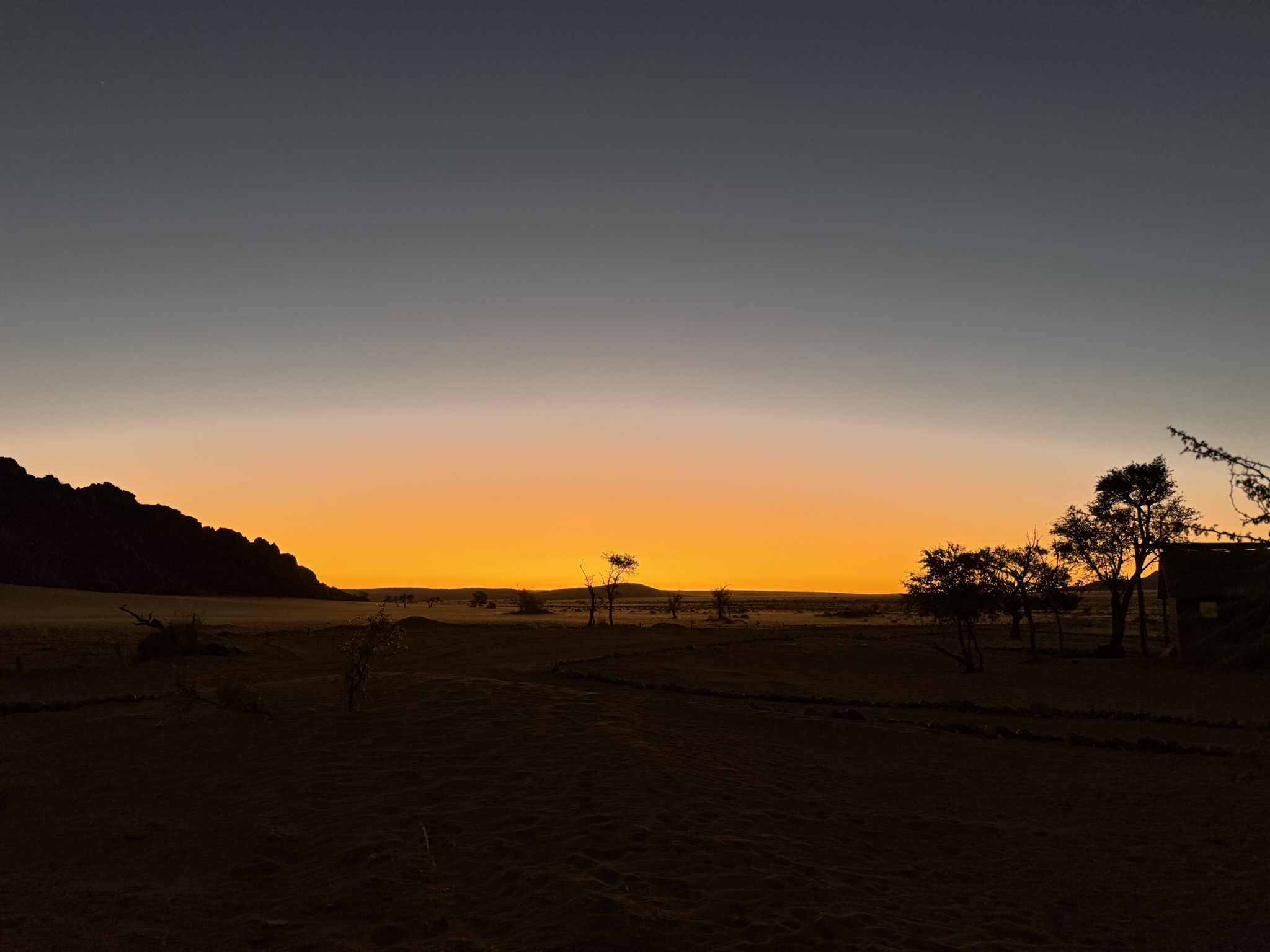
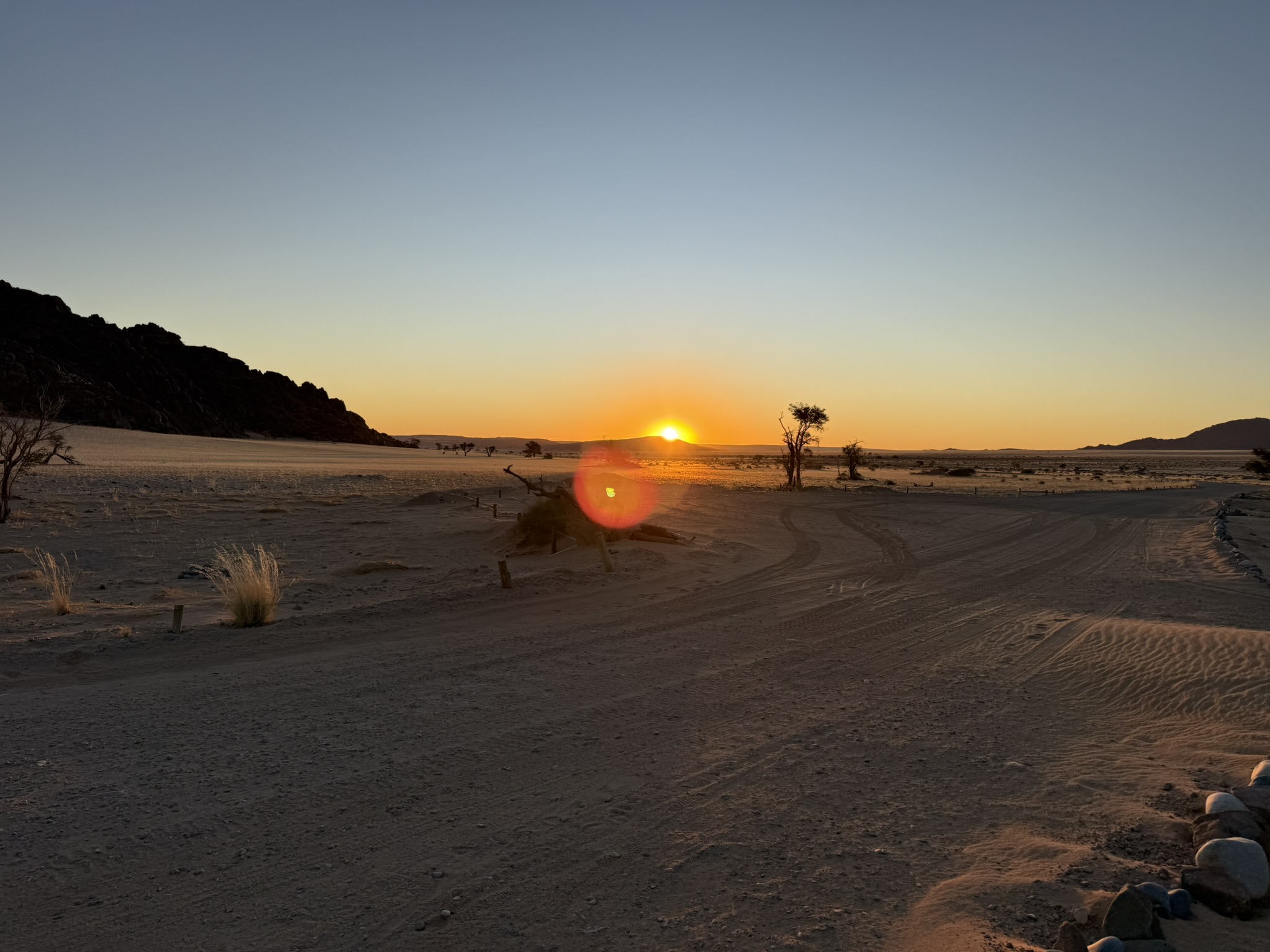
Arriving at sunrise, the dunes revealed themselves in shifting shades of orange, red, and gold—each one casting long shadows that changed with every passing minute. Some of these dunes rise over 300 meters high, among the tallest in the world.
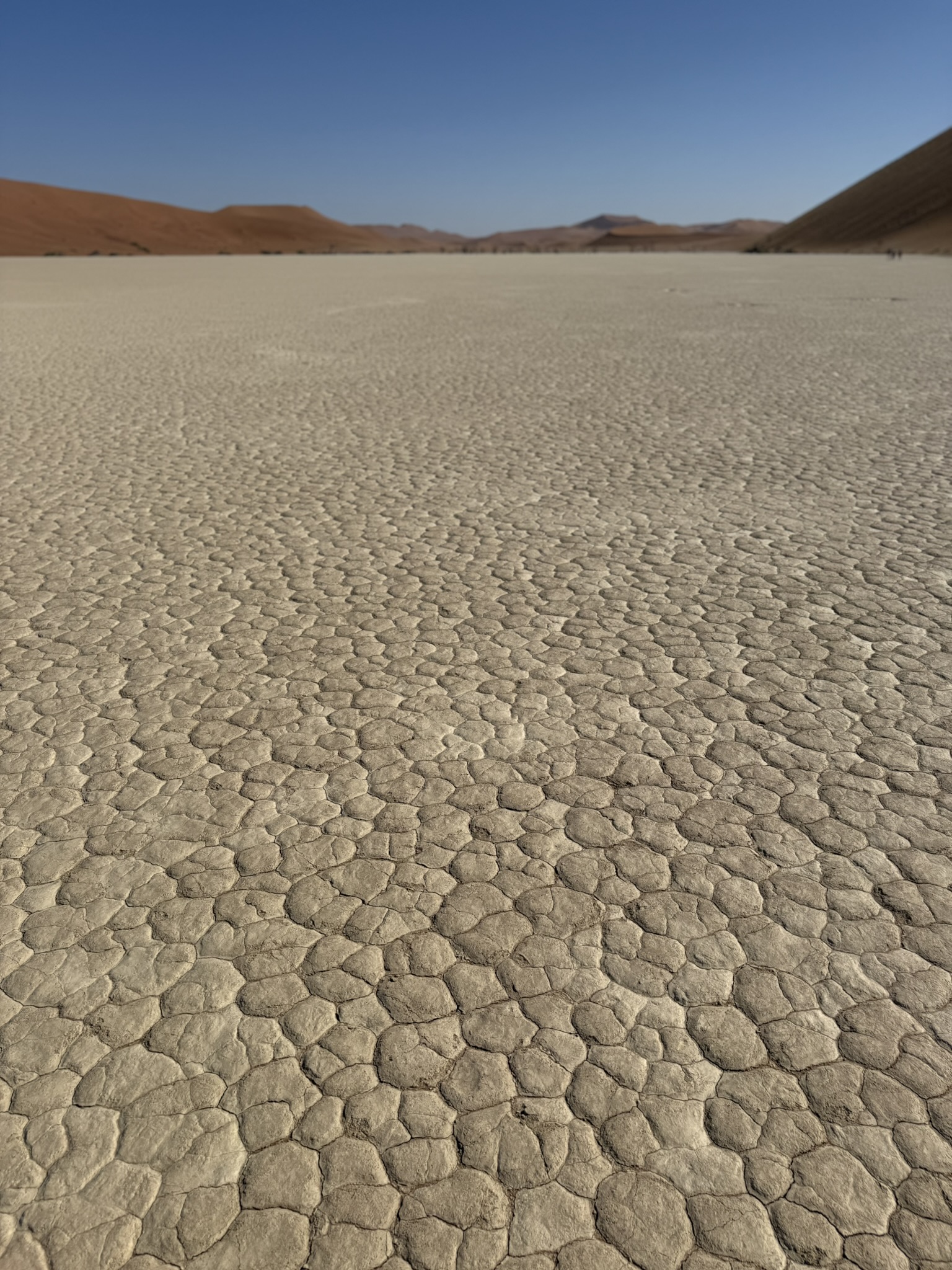
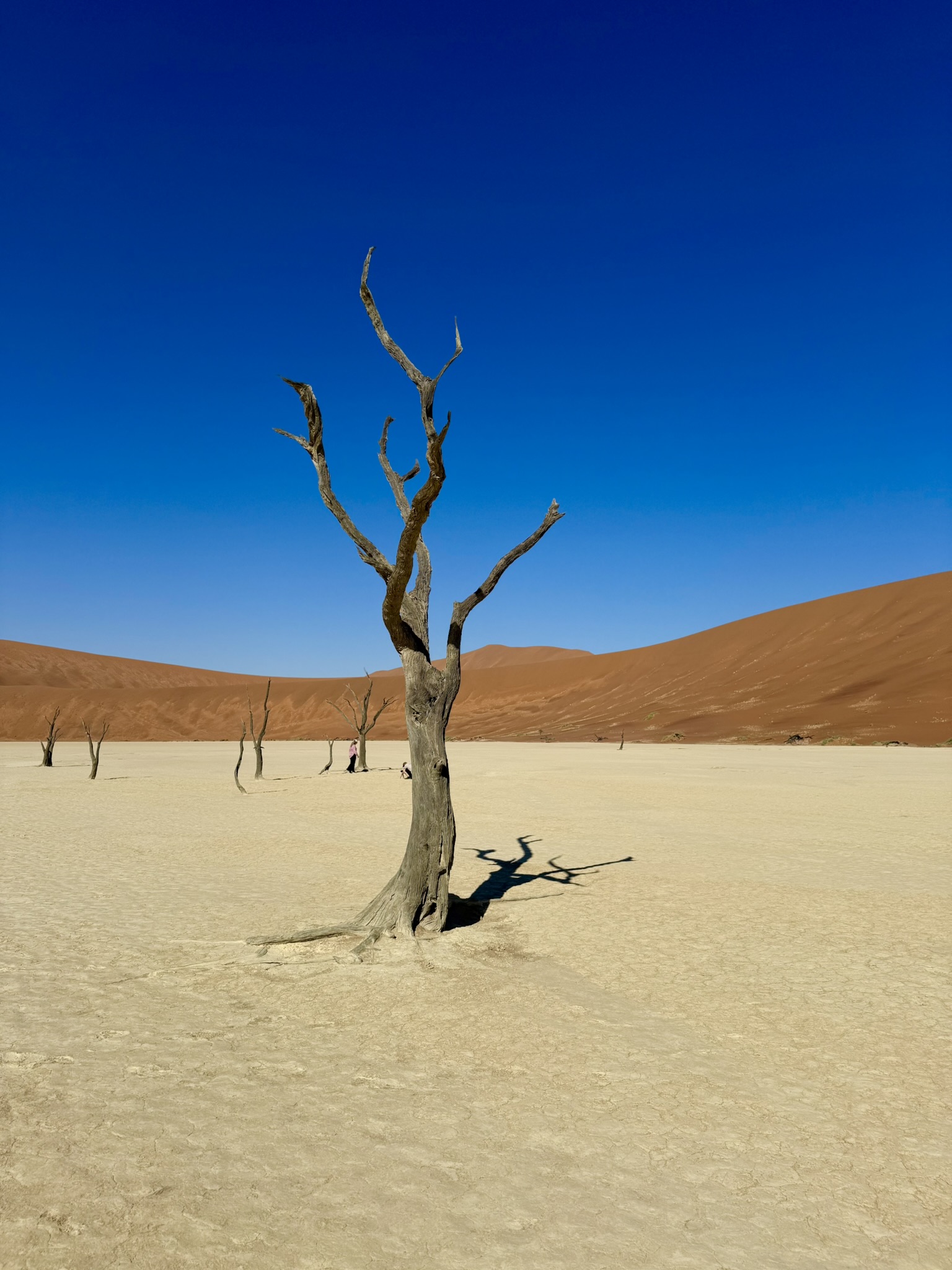
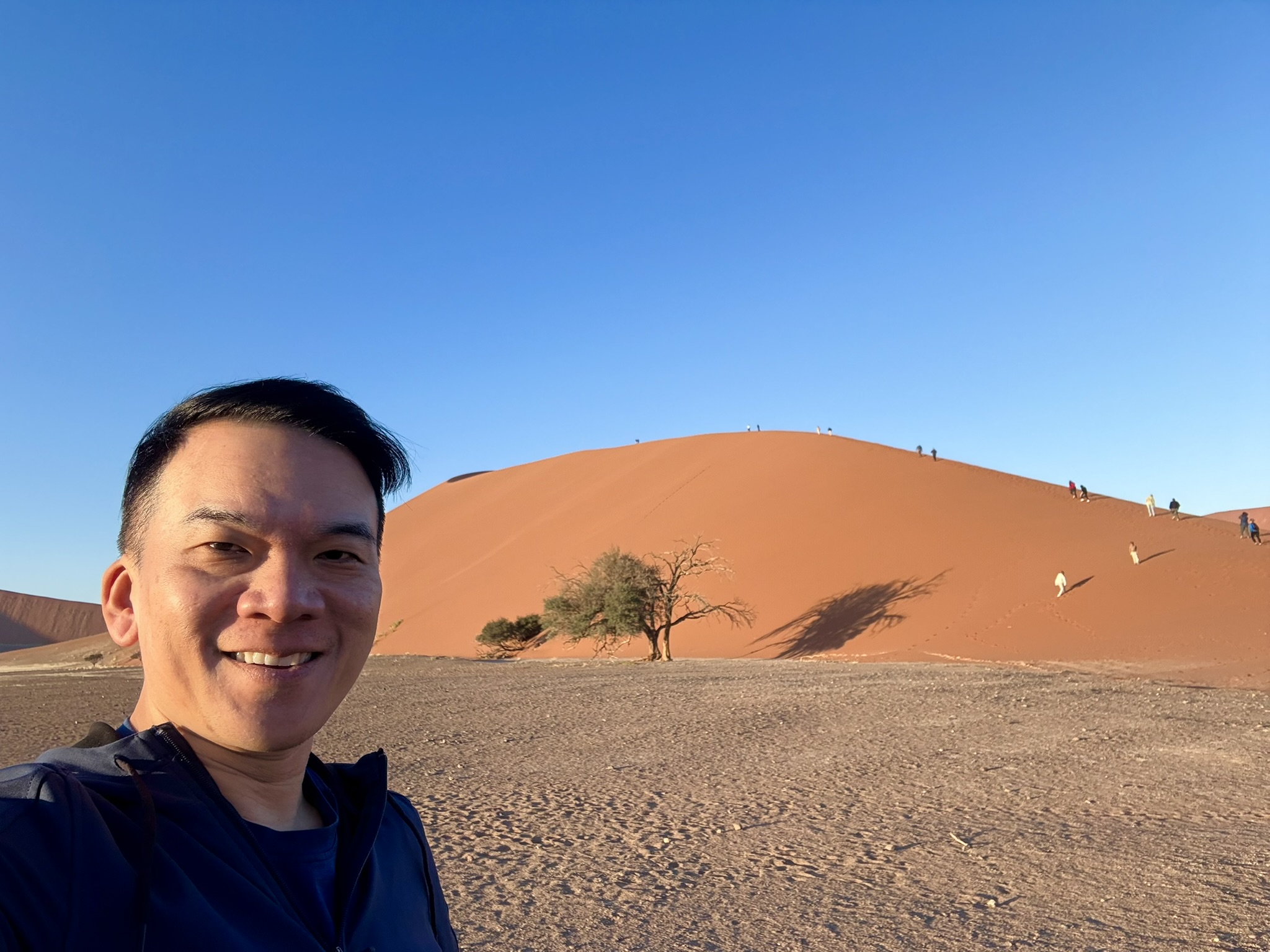
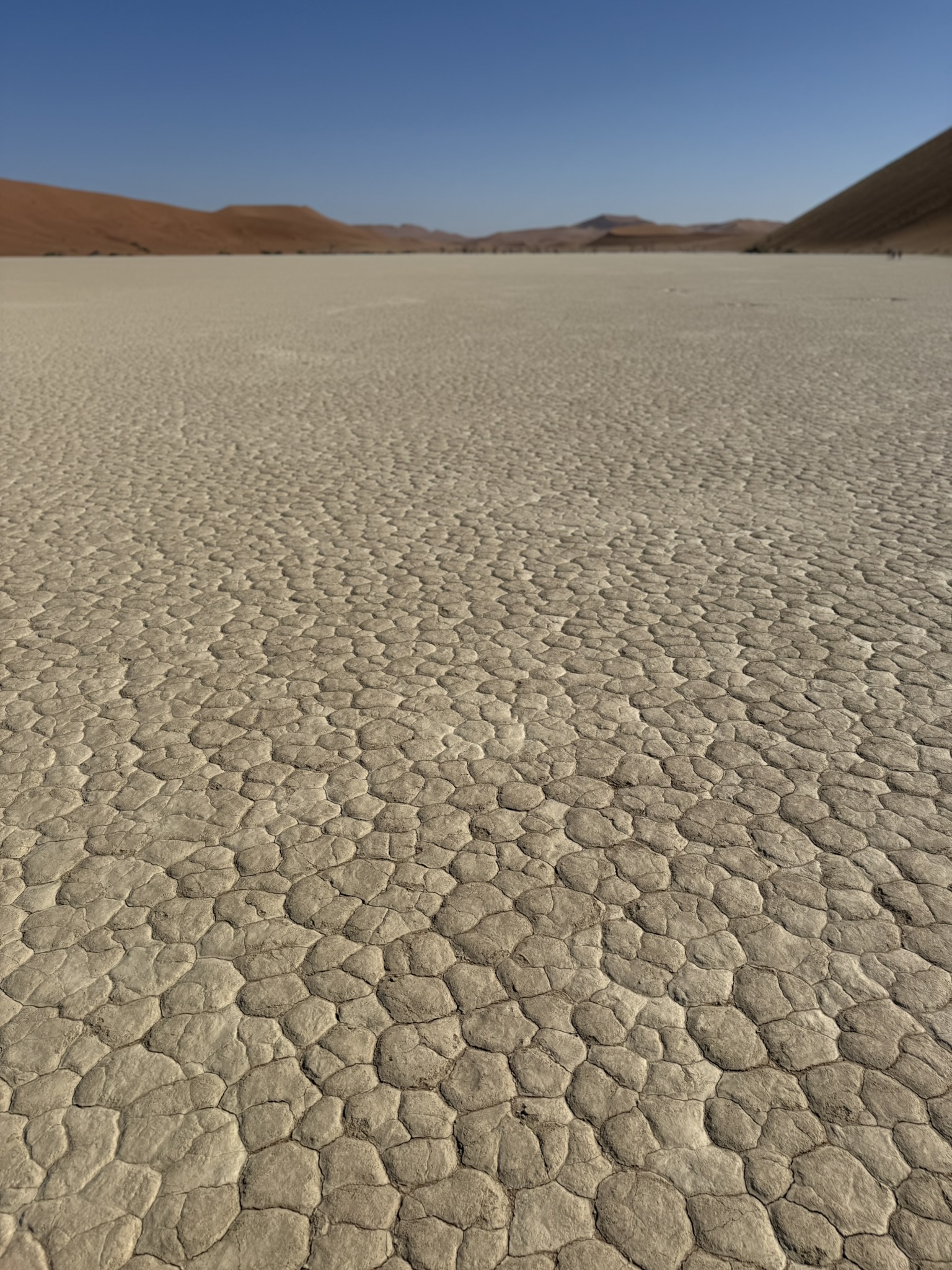
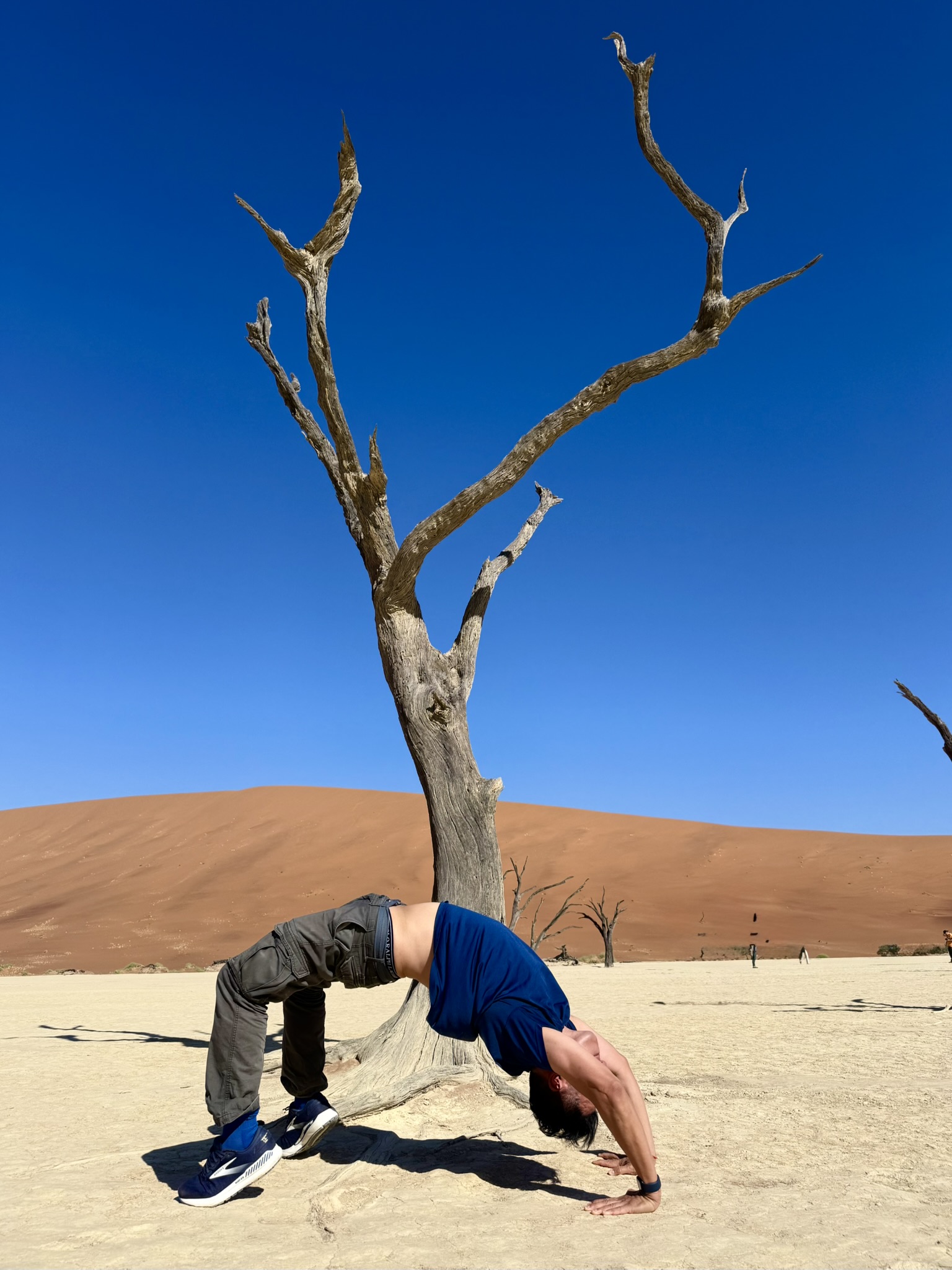
Walking through Dead Vlei, surrounded by ancient, skeletal trees that have stood for over a thousand years, felt like stepping into another dimension. The contrast between the white clay pan, blackened tree trunks, and towering red dunes creates a landscape that is almost surreal in its beauty.
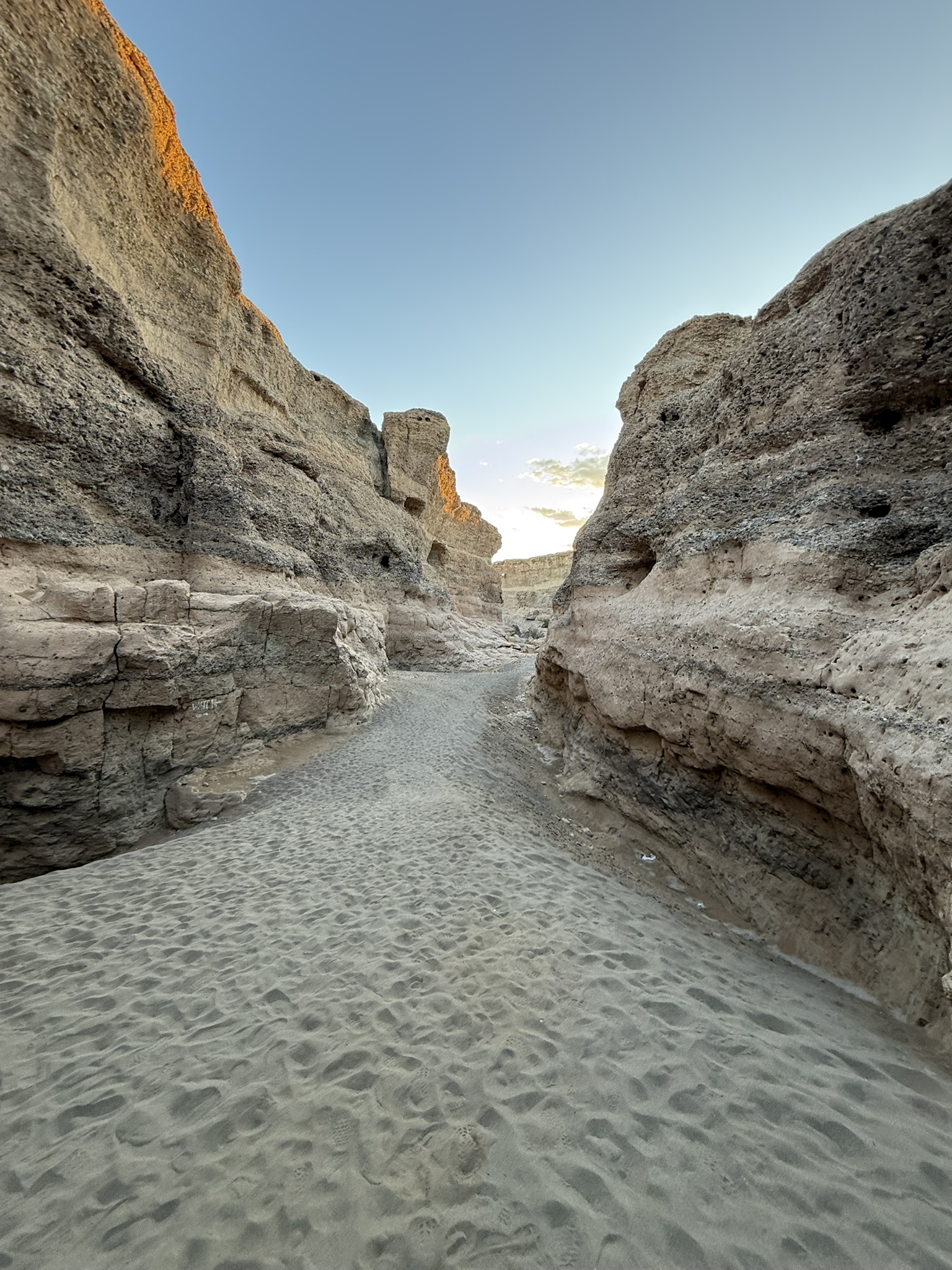
Nearby, Sesriem Canyon tells another story—carved over millions of years by the Tsauchab River, a reminder that even in the driest places, water once shaped everything.
Namibia's desert is not just scenery—it's history, geology, and time made visible.
Why Namibia Is Unmissable
Namibia is not a place you visit—it's a place you experience.
It offers:
- Landscapes you won't find anywhere else
- A sense of space and solitude that's increasingly rare
- A blend of cultures, histories, and influences
- Moments that feel both grounding and humbling
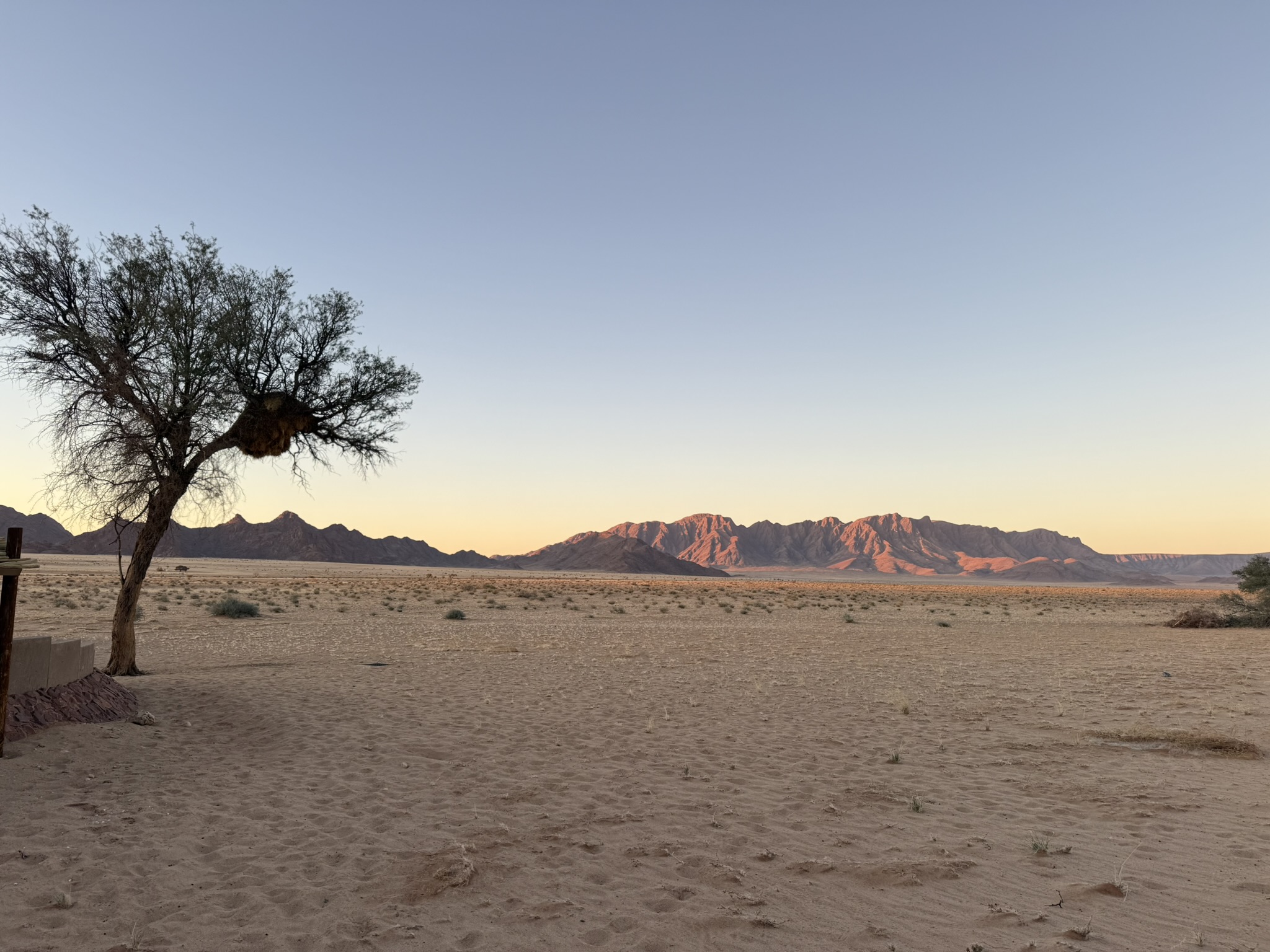
From the modern calm of Windhoek, to the European charm of Swakopmund, to the surreal collision of desert and ocean at Sandwich Harbour, and finally into the timeless expanse of the Namib Desert—this is a journey that stays with you.
Namibia doesn't shout for attention.
It doesn't overwhelm.
Instead, it reveals itself slowly, quietly—and in doing so, leaves a deeper impression than almost anywhere else on Earth.